
Rethinking inclusive participation for cities
This post was written by Francesca Ranalli.
A dream comes true: researchers, policy makers, young people, and practitioners sharing and learning from each other
Making participation inclusive with creativity
Participation in the Netherlands has become a standardised element of urban development processes. Yet, outcomes in practice frequently fail to involve diverse groups of people, such as diverse age groups, including children and youth. For them, ‘traditional’ methods are often not enough, leading to the result of their voices being unheard. To make participation more inclusive and more effective for different age groups, we should be more creative and innovative. For instance, walking, art-based methods and bottom-up approaches can help adapt to their ways of communicating and imagining the city. By involving different age groups, we can also reach across gender, social classes, and lifestyles.
Walking through the senses together
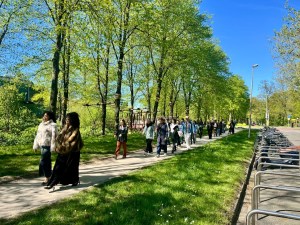
A group of about 25 researchers, policy makers, young people, and practitioners walked together through their senses in the University Botanical Garden to engage with different perspectives. In five groups people walked, meanwhile focusing on one sense each, either hearing nature and traffic, feeling the touch of different terrains, seeing nature and urban spaces, smelling flowers, or tasting teas. Participants felt that focusing on one sense helped them notice new things in their surroundings and share them in smaller groups. They came back together and shared different perspectives. They felt it could be inspiring, instead of challenging, in urban planning to discuss different needs from the angle of residents, developers, researchers and policymakers.
Creative methods: an overview
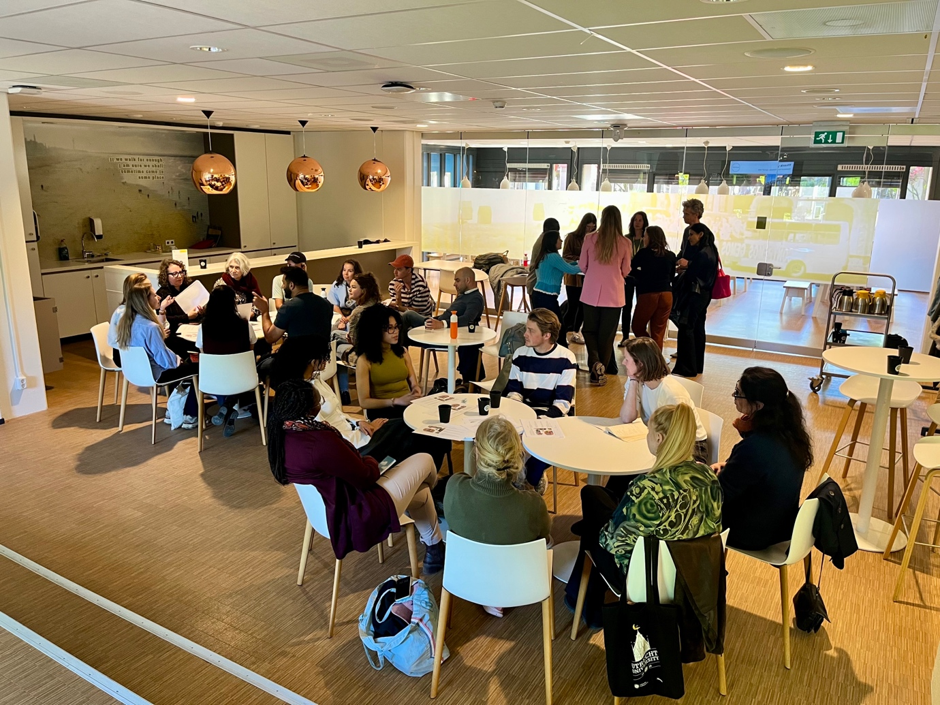
Francesca Ranalli presented her fieldwork and research results on using creative and art-based methods with different age groups in city making, including children and young people. Participants could see different methods: walking with children, young people and stakeholders, drawing, modelling, mapping, making art installations in public spaces, and designing a youth meeting place together. Those methods helped diverse groups participate in their own ways of communicating and imagining spaces and communities. In research around youth and communities, photos are often used as a tool in combination with other creative methods for an easily accessible and fun way to involve youth. Ultimately, we learned how research and practice need to work together to experiment with those methods and make participation more inclusive.

Three innovative stories: building your home, children’s TV news, and co-designed public spaces
What do a planner from the municipality, Jacqueline Tellinga, a filmmaker and environmental expert, Eric Creemers, and an architect, Isabel Driessel, have in common? They all explore creative and innovative practices to meaningfully involve people living in the city. Through a breakthrough process of building one’s own homes in places that would otherwise be untouchable, Jacqueline pushes the boundaries of urban development. Through fun and educational videos made by and with children and adolescents, Eric gives a voice and creates space for them to be heard and involved in cities. And through drawing, modelling, and ultimately designing public spaces and schools in children’s and young people’s neighbourhoods, Isabel helps them become real architects. Participants were inspired and continue sharing with them in the respective roundtables.
Sharing and learning by doing
Three roundtables produced the following fruitful insights thanks to sharing from different expertise, moderators (Francesca Ranalli, Pascale van Zanvliet, and Céline Janssen) and each of the three pitch speakers. Lessons learned are that:
- The methods need to be fun for the participants, as it helps with the recruitment and commitment to participate
- The environment is influential. A classroom setting evokes different behaviour in children and young people than an outdoor setting
- To work with creative methods, experts need to be involved, such as filmmakers, artists and architects, to guide the process
- Specific target groups require different types of methods, better when bottom-up
- A network of researchers and professionals who are experts in different types of methods. This way, we can help each other select and conduct an appropriate method for a specific case study
- While art carries the potential to contribute to participatory planning for promoting meaningful interaction among participants, creative and art-based methods are not yet common practices in planning and research with youth
- Different creative methods involve different skills, such as verbal, visual and movement, and the promotion of perspective taking and self-awareness, which are valuable for learning how people experience spaces and communities
- Giving participants a real voice in planning practice sometimes requires pushing the boundaries and going beyond existing rules and policies.
- ‘The system’ is personal; innovations do not only require governance capacity and formal decision-power but also personal commitment, motivation and willingness for ‘the unknown’ from professionals.

Moving forwards
All participants agreed. We don’t want this workshop to end there, but to be a starting point for meaningfully sharing within the network, experiences, challenges and potentials. The provided overview of methods was useful, and joint guidelines on how to adopt them, with pros and cons, would be valuable for both researchers to define their fieldwork methods and professionals to engage with diverse residents across age groups, genders, social classes, and lifestyles.
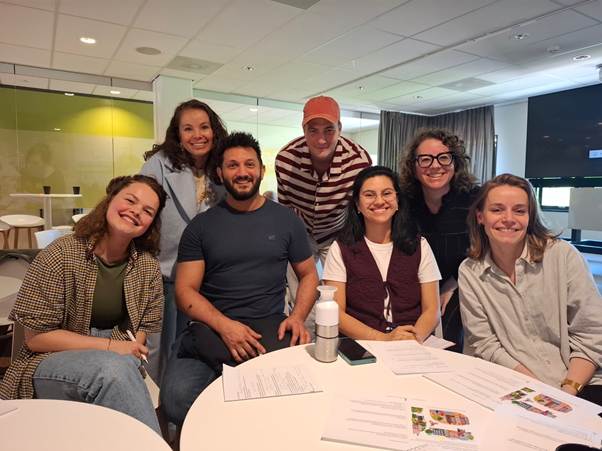
Together, we can make participation more inclusive and give a voice to children, young people and all diverse groups living in the cities.
