
Did Urban Planners Get It Wrong?
Six Years After COVID-19, the Question Looks Different
This post was written by Fuad K. Malkawi, Ph.D., The World Bank
On May 26, 2021, at the height of the COVID-19 pandemic, I gave a talk titled Post-COVID-19 Cities: What Should Planners Expect? as part of Connect21: Bridging Multiple Knowledge Gaps in Global Urban Real Estate Research, a seminar organized by the Urban Governance Research Network (UGoveRN) at the University of Amsterdam. The argument rested on two related points: first, that the pandemic forced decision-makers and planners to confront long-standing urban challenges too often treated as secondary; and second, that once the emergency passed, cities would still face the same unresolved problems (weak infrastructure, inadequate services, fragmented governance, and outdated planning systems) but with renewed urgency and less room for delay.
Six years later, that argument still holds. COVID-19 no longer defines the urban agenda, but it continues to reveal which cities adapted, which systems proved resilient, and which old problems never really went away.
This is especially true in the debate over density. For decades, planners argued that density could make cities more efficient, sustainable, and productive. Compact cities reduce travel distances, support public transport, improve access to jobs, and limit sprawl. Yet COVID-19 briefly reopened an uncomfortable question: when density is combined with weak infrastructure, poor services, and fragile governance, is it an asset or a liability? Six years later, the answer is clearer. Density itself was not the problem. The problem was density without adequate housing, sanitation, mobility, public space, digital access, and capable institutions.
The central question, then, is not whether urban planners got density wrong. It is whether planning systems were strong enough to manage it. Many cities absorbed extraordinary population growth and economic activity without the infrastructure, fiscal capacity, data systems, and institutional coordination needed to make density work. COVID-19 did not prove that cities were obsolete. It showed that badly managed density is dangerous, while well-serviced and well-governed density remains a foundation for prosperity, inclusion, and climate action.
Kolkata, Karachi, and Lagos show that density fails when cities lack room to breathe.
Kolkata illustrates this dilemma. One of South Asia’s great metropolitan centers, it is a place of employment, consumption, trade, and culture. Its location along the Hooghly River gives it a strategic economic role, but also a difficult geography: the river divides the port and major consumption centers from the hinterland, placing enormous pressure on a limited number of crossings. Passenger and freight flows compete for scarce road space, while congestion, pollution, and delays undermine both livability and competitiveness.
Kolkata’s story is not unique. Karachi faces a similar convergence of rapid growth, infrastructure gaps, informality, and fragmented governance. Large shares of its population live in informal settlements, many with limited access to water, sewerage, solid waste collection, public transport, and safe public spaces. In these conditions, asking residents to keep distance, stay home, or avoid shared facilities is not merely behavioral; it is spatial and institutional.
Lagos adds a third version of the challenge. As Nigeria’s commercial and financial hub, it is central to the national economy, but its growth has been accompanied by rapid population increase, uncontrolled spatial expansion, a large housing deficit, slums, inadequate infrastructure and services, and rising climate risks. The World Bank Lagos diagnostic study points to weak urban governance and finance, ineffective planning, fragmented land administration, and constraints on affordable housing and private development. Lagos shows that the problem is not only crowding, but the inability of planning, land, finance, and service-delivery systems to keep pace with metropolitan growth.
Across Kolkata, Karachi, and Lagos, density is not simply a number of people per square kilometer. It is a lived condition shaped by access to water, sanitation, waste management, public transport, open space, housing quality, land systems, climate resilience, and reliable local services. Where these systems are weak, density intensifies risk. Where they are strong, density supports opportunity. The pandemic revealed a deeper truth: the health of a city cannot be separated from its planning system. When drainage, housing, transport, data, land administration, finance, and local government capacity are weak, any shock (pandemic, flood, heatwave, or downturn) becomes a stress test for the entire urban system.
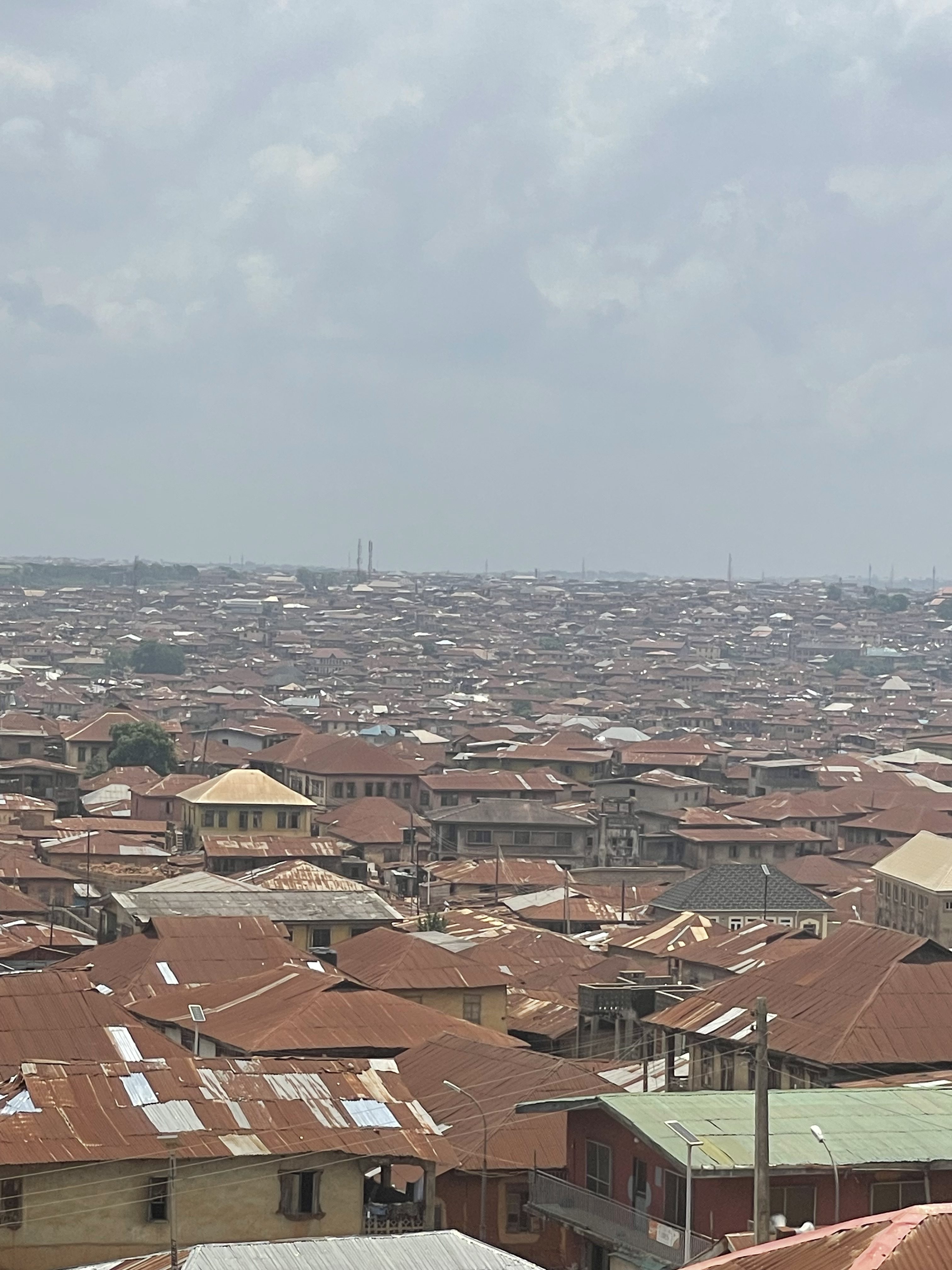
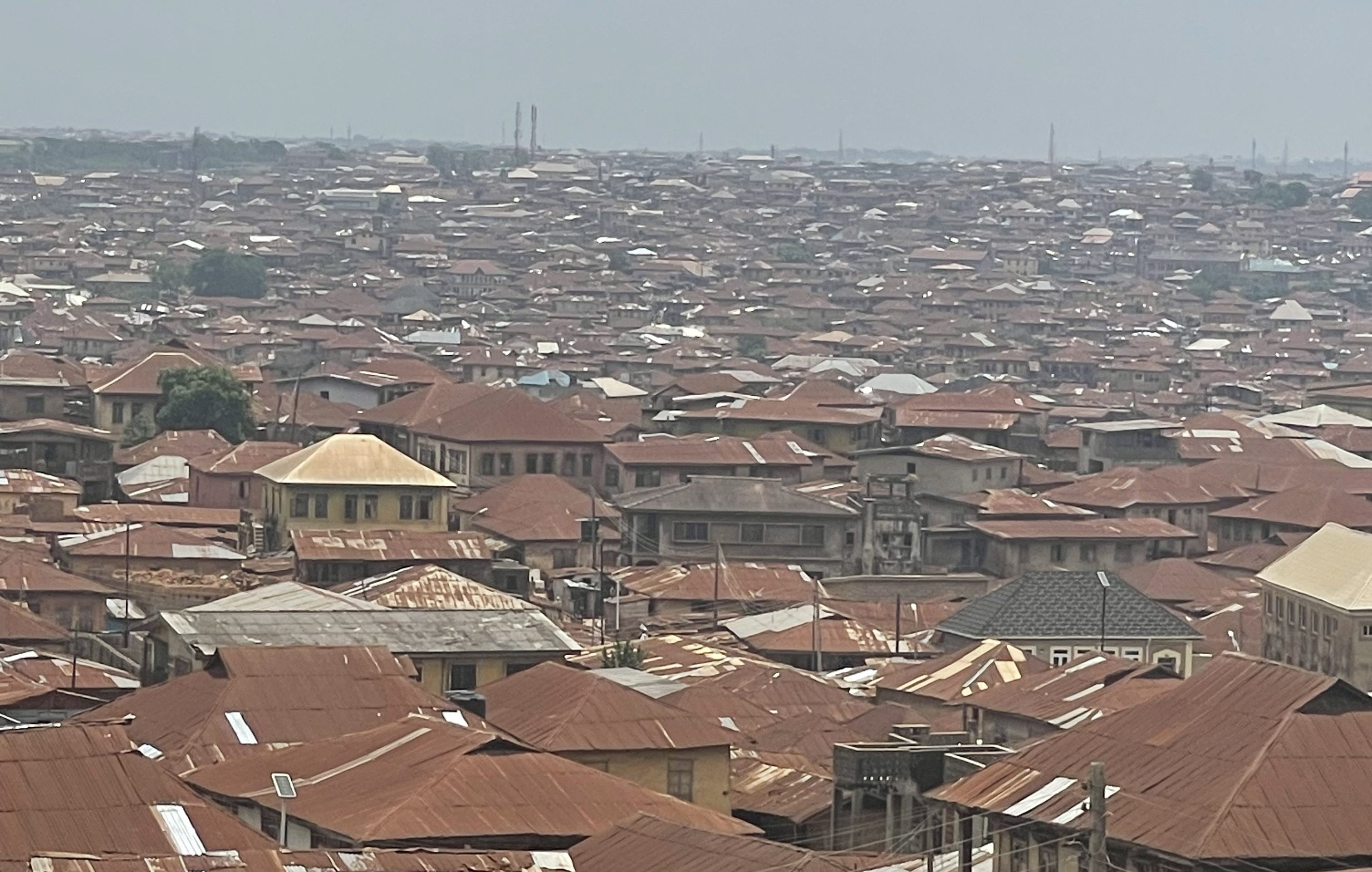
Figure 1. Ibadan, Nigeria, 2024. Photo by the author.
Density and disaggregation only work when planning systems can make them work.
One response to overcrowding has been disaggregation: shifting growth away from congested cores through new towns, satellite settlements, or peripheral development. Kolkata’s Salt Lake and New Town, and Karachi’s large private housing developments, reflect this impulse. They promise cleaner environments, wider roads, modern infrastructure, and relief from the old city. But disaggregation is not a cure. New towns often absorb only a small share of metropolitan growth, serve limited income groups, and depend on continued commuting to the core. If jobs and services remain concentrated in the center, peripheral expansion can reproduce exclusion, increase travel burdens, and deepen inequality.
This is why the issue is not whether planners believed too much in cities, density, or disaggregation. Planners did not fail because they valued compact cities or searched for ways to ease pressure on congested urban cores. The larger failure lies in planning systems that became reactive, under-resourced, fragmented, and disconnected from implementation. Many cities prepared long-term plans that were overtaken by events before they could be implemented. Others lacked the authority, fiscal tools, data, or political support needed to turn plans into investments. The real challenge is whether planning systems can organize growth in ways that anticipate change, coordinate infrastructure, protect public space, serve vulnerable groups, and translate vision into action.
Six years later, cities have changed, but their old problems remain.
Six years later, the world has not abandoned cities or density. But urban life has changed. Hybrid work has weakened some central business districts while strengthening demand for mixed-use neighborhoods closer to home. Public transport systems in many cities are still rebuilding ridership and revenue. Streets, sidewalks, parks, markets, and waterfronts are now more widely understood as essential urban infrastructure, not amenities. At the same time, climate shocks, housing affordability, fiscal stress, and infrastructure backlogs have become more urgent than the pandemic itself.
This makes the post-pandemic lesson practical. Cities such as Kolkata, Karachi, and Lagos still need to deal with the basics: clean water, sewerage, solid waste management, drainage, affordable housing, safe transport, accessible public space, and digital connectivity. These are not secondary concerns, and they are not only public health measures. They are the foundations of resilience, productivity, and social inclusion.
The planning agenda has also shifted. Cities need to move beyond static master plans toward spatial planning that is evidence-based, phased, financially realistic, and connected to institutions capable of implementation. They need better data to understand where vulnerability is concentrated, how people move, where services fail, which neighborhoods are excluded, and how public investments can deliver the greatest benefit. The most useful plans will not predict the future perfectly; they will help cities adapt when the future changes.
The lesson: plan better, not less
The lesson for urban planners is not to abandon density, but to manage it differently. Density must be matched with services, governance, open space, mobility choices, social inclusion, and climate resilience. It must be understood not only as a physical condition, but as a relationship between people, land, infrastructure, institutions, and opportunity.
So, did urban planners get it wrong? Not entirely. But six years after COVID-19, the lesson is sharper: planning cannot remain a document on a shelf, and resilience cannot be treated as a slogan. Planning must become a practical system for making cities healthier, fairer, more adaptive, and better prepared for the next crisis—whether that crisis comes from disease, climate, infrastructure failure, or inequality.

You may also like


