

Digital urban governance walk
From Rembrandt to AI in the streets of Amsterdam
This post was written by Tuna Tasan-Kok.
As part of UGoveRN’s International Workshop on Digital Urban Governance, we kicked off our two-day event in Amsterdam with a unique walking excursion that explored the intersection of public space, urban technologies, and critical urban governance. Joined by Dr. Li Wan from the University of Cambridge and international UGoveRN members spanning from Italy to Australia, as well as Dutch members, we traced a route through the heart of the city, from the historical Nieuwmarkt to the experimental Marineterrein, uncovering how digital infrastructures are shaping contemporary urban life.

Setting the stage: From Nieuwmarkt to the digitalised city
We began our journey at the iconic Waag Futurelab, where Bart Tunnissen, New Business and Legal Director, welcomed us with a captivating presentation titled “Digital Governance: From the Public Stack to Empowered Citizenship.” Waag, once a medieval gatehouse and later a guildhall, now serves as a symbolic and literal gateway into Amsterdam’s digital experimentation. Bart’s talk took us on a conceptual ride from Rembrandt’s era to algorithmic governance, challenging the notion that technology is neutral. He introduced us to Waag’s Public Stack model, a layered approach to digital innovation grounded in public values, transparency, and inclusivity.
Bart emphasized that governance must be built into the very foundation of digital systems. Projects like Smart Citizens Lab and Dutch Skies exemplify this ethos: using open-source tools, citizen science, and shared data platforms to democratize environmental monitoring and tech development. These are not abstract ideals. Waag actively collaborates with local governments, schools, GGD health authorities, and residents, proving that social infrastructure and digital infrastructure must go hand in hand.
Marineterrein: Amsterdam’s living lab for digital experimentation
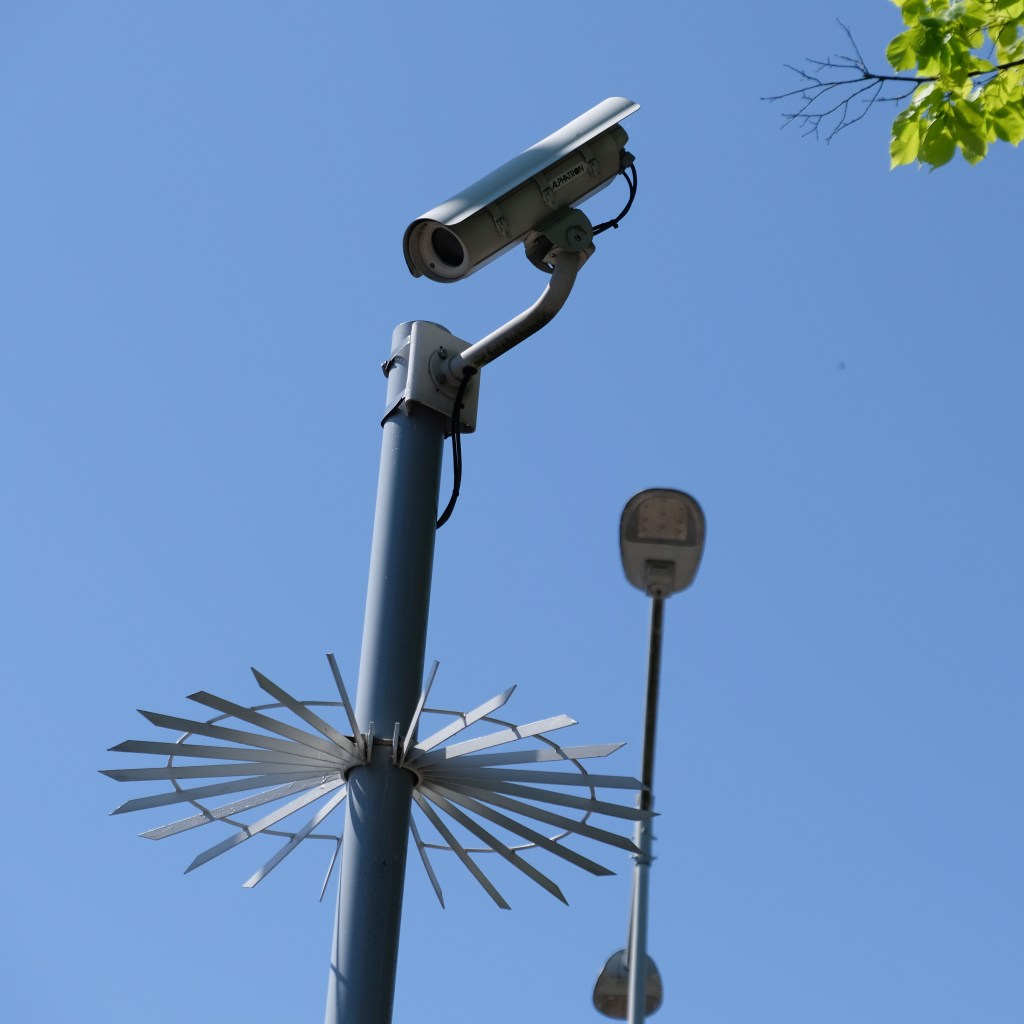
Inspired and energized, yet also overwhelmed by the realization that we are only seeing the tip of the iceberg in Bart’s words regarding the regulation of digital tools involved in the governance of the city, we took to the streets of Amsterdam. Led by our route map, we passed through Nieuwmarkt, Valkenburgerstraat, and the Amsterdam Centre for Architecture (ARCAM), where we were briefed on interesting projects underway in the city. We finally arrived at the Marineterrein, a testbed for smart urban technologies and innovation. There, we met Tom van Arman, founder of Tapp | Smart City Architecture, who introduced us to the real-world experiments transforming this former naval base into a “living lab.” Through interactive urban design, data dashboards, and IoT infrastructure, the Marineterrein is being reshaped as a zone for experimentation in mobility, environment, and public participation. The experiments here, ranging from noise and crowd sensors to adaptive lighting and autonomous boat navigation, show how cities can test, learn, and iterate urban technology before large-scale implementation.
Tom’s emphasis on ethical design and human-centered tech echoed the critical points raised earlier at the Waag. While technology offers immense potential, it must be rooted in transparent governance, social justice, and ecological responsibility.

This excursion did more than just showcasing Amsterdam’s digital projects. It sparked powerful conversations about what it means to govern cities in an age of data and automation. From open-source air quality monitors to algorithmic bias in public systems, our walk highlighted the urgency and possibility of designing urban futures that are just, democratic, and sustainable.
The walk concluded at Kanteen25 for a well-earned lunch, followed later by Professor Li Wan’s keynote and our evening gathering. But it was this physical, tangible encounter with the city and its digital experiments that grounded our discussions and reminded us of the street-level stakes of urban governance.
Toward a shared platform: UGoveRN in action
For UGoveRN, it was not just a tour, it was a step toward building a truly collaborative platform for studying and shaping digital governance in cities. These on-the-ground experiences resonate with wider global discussions on how cities balance digital innovation with regulatory accountability. As digital infrastructures become embedded in everything from zoning laws to mobility systems, understanding the governance frameworks that guide them is critical. The Amsterdam case offers a compact lens into how experimentation and regulation can evolve hand in hand.

This excursion not only inspired ideas, but also laid the foundation for collaborative urban research and policymaking. Energized by the walk, UGoveRN members came together for a full-day workshop the next day, where they exchanged insights and experiences on digital governance, drawing direct inspiration from the Amsterdam’s living examples and sparking new ideas for collaborative research.
Tag:Events

You may also like

Summer festivals & the unjust consequences of safety regulations
Bridging top-down and bottom-up mobility policy
