

Digital urban governance walk
From Rembrandt to AI in the streets of Amsterdam This post was written by Tuna Tasan-Kok. As part of UGoveRN’s International Workshop on Digital Urban...
Read More »

Governing cities, imperfectly: Patrick Le Galès
This post was written by Tuna Taşan-Kok. On a crisp spring afternoon in Amsterdam, UGoveRN and the Urban Planning (UP) Group welcomed Professor Patrick Le...
Read More »

The entanglements of urban water governance in India
This post was written by Mathew Idiculla. Indian cities routinely face various types of water crises, ranging from acute water scarcity to devasting urban flooding....
Read More »

The myth of the perfect scale
This post was written by David Evers. [The text was originally published in Dutch in Rooilijn, which can be accessed here: https://www.rooilijn.nl/artikelen/zin-en-onzin-van-decentralisatie/] After two decades of...
Read More »

Who governs the (ordinary) city and how?
Learning From Urban Realities of Ordinary Cities This post was written by Güldem Özatağan. In their recent UGoverN blogpost, Avni and Alster (2024) grabbed a...
Read More »

Liberal cities in reactionary nation-states
A research agenda This post was written by Nufar Avni and Tal Alster. Our research project aims to unpack the trend of local governments seeking...
Read More »

Unleashing the power of adaptive regulation
This post was written by Tuna Tasan-Kok. Adaptive regulation is characterized by a regulatory framework that is flexible, iterative, and capable of adapting to dynamic...
Read More »


June 10, 2024
UGoveRN Keynote: Prof. Jonathan Metzger (KTH)
On June 10th and 11th, the International Event featuring Prof. Jonathan Metzger from KTH Stockholm took place in Amsterdam. Highlights included an engaging excursion on...
Read More

December 10, 2024
UGoveRN Keynote: Prof. Patrick Le Galès (Sciences Po)
Patrick Le Galès (SciencesPO, Paris) visited Amsterdam to deliver an insightful keynote talk on the fundamentals of governance research. Referring to his latest article on...
Read More
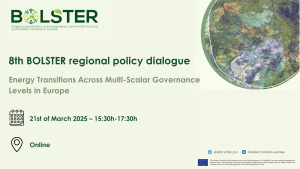
March 21, 2025
UGoveRN – BOLSTER Webinar “Energy Transitions Across Mulit-Scalar Governance Levels in Europe”
In March, UGoveRN members participated in an online policy dialogue organized by the BOLSTER project (Bridging Organizations and marginalized communities for Local Sustainability Transitions in...
Read More

March 14, 2024
Joint Session with the Province of North-Holland
The session opened with introductions and a presentation of UGoveRN, providing participants with an overview of its goals and ongoing activities. Attention then turned to...
Read More

May 17, 2023
Fragmented Development Excursion in Amsterdam Noord
Seventeen UGoveRN members and allies gathered at Amsterdam Centraal to embark on the ferry to Buiksloterweg in Noord. The event committee had organized a tour...
Read More