
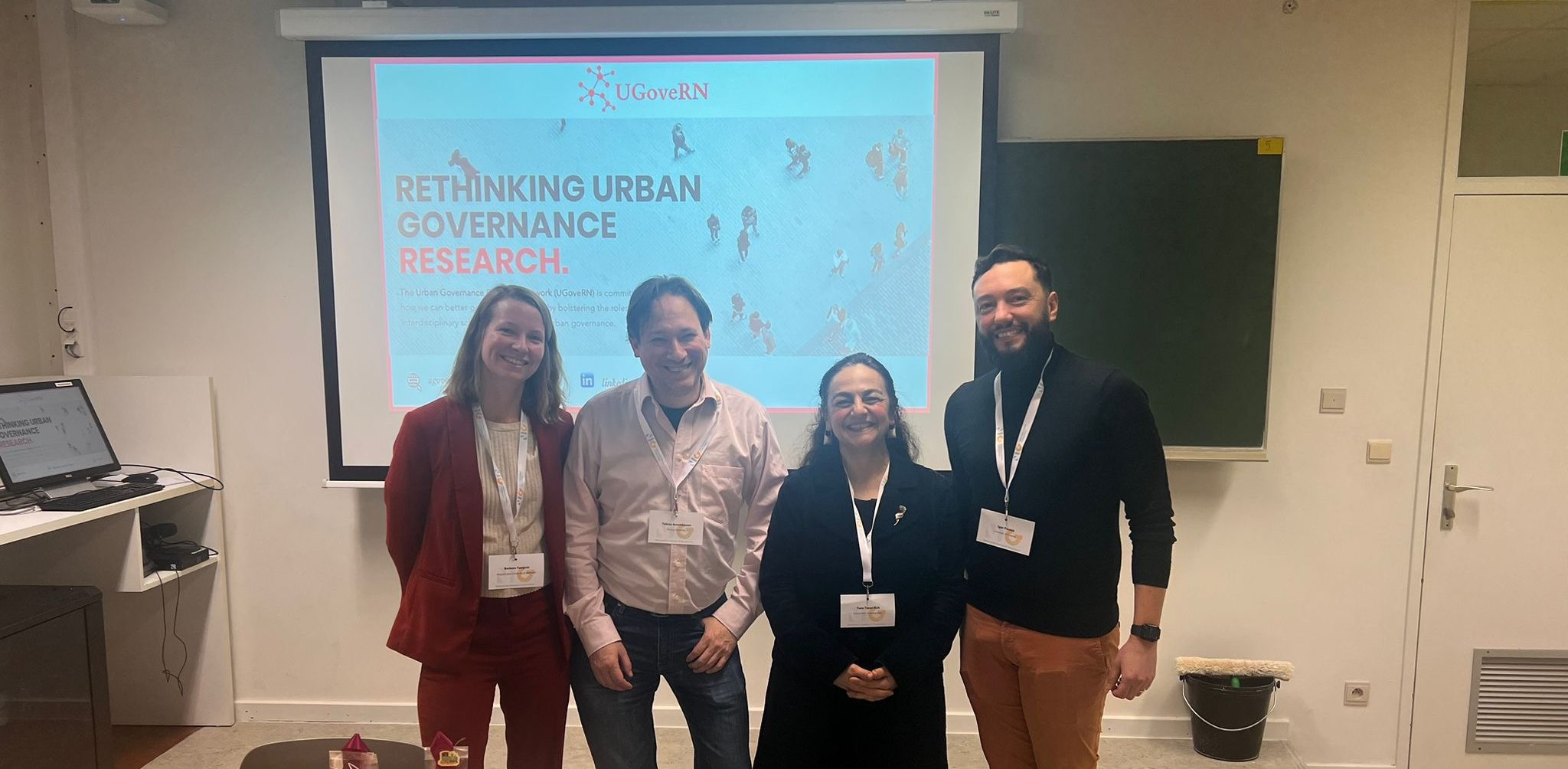
The 21st NIG Conference will be hosted at the Campus of Ghent University. The conference will take place on February 6 & 7, 2025: https://www.nigovernance.nl/nig-conference-2025/
Chairs:
Igor Pessoa (University of Twente, The Netherlands) i.pessoa@utwente.nl
Barbara Tempels (Wageningen University, The Netherlands) barbara.tempels@wur.nl
Danielle Chevalier (Leiden University, The Netherlands) d.a.m.chevalier@law.leidenuniv.nl
Tobius Arnoldussen (Tilburg University, The Netherlands) n.t.arnoldussen@tilburguniversity.edu
Tuna Tasan-Kok (University of Amsterdam, The Netherlands) m.t.tasankok@uva.nl
Description of the panel and themes
Cities around the world are pushing for higher densification to tackle mobility challenges, reduce environmental impact and improve life quality. Concepts like the 15-minute city became popular visions for urban policies. At the same time, in this growing densified and diverse urban environment, polarization has grown in different levels. From social and economic inequality to political fragmentation, studies have shown that polarization has been growing in cities. Living in growing densified urban areas does not necessarily lead to less polarization. The understanding of urban governance in a time of densification and at the same time polarization becomes fundamental for academics and policymakers.
In this panel, we will look into Governance using an urban lens to address a large array of challenges related to densification and polarization. We are a multidisciplinary group, and we welcome research on, as an example but not limited to, the governance of housing provision, inclusive urban participatory methods, overcoming spatial segregation and inequality, mistrust and collaboration in cities. A few examples of questions that we will focus on are: What innovative governance models exist to manage the challenges of densification and polarization in urban environments? How can policymakers balance the need for densification with the preservation of community character and affordable housing? How extremely diverse cities are developing governance arrangements to accommodate such diversity? How does urban densification impact socioeconomic polarization in cities? What role does public infrastructure play in addressing or exacerbating urban polarization? What are the environmental implications of urban densification, and how do they intersect with issues of social equity?
Read a blog post about the event here: https://ugovern.eu/urban-governance-meets-polarised-realities-ugoverns-first-panel-at-nig-ughent/