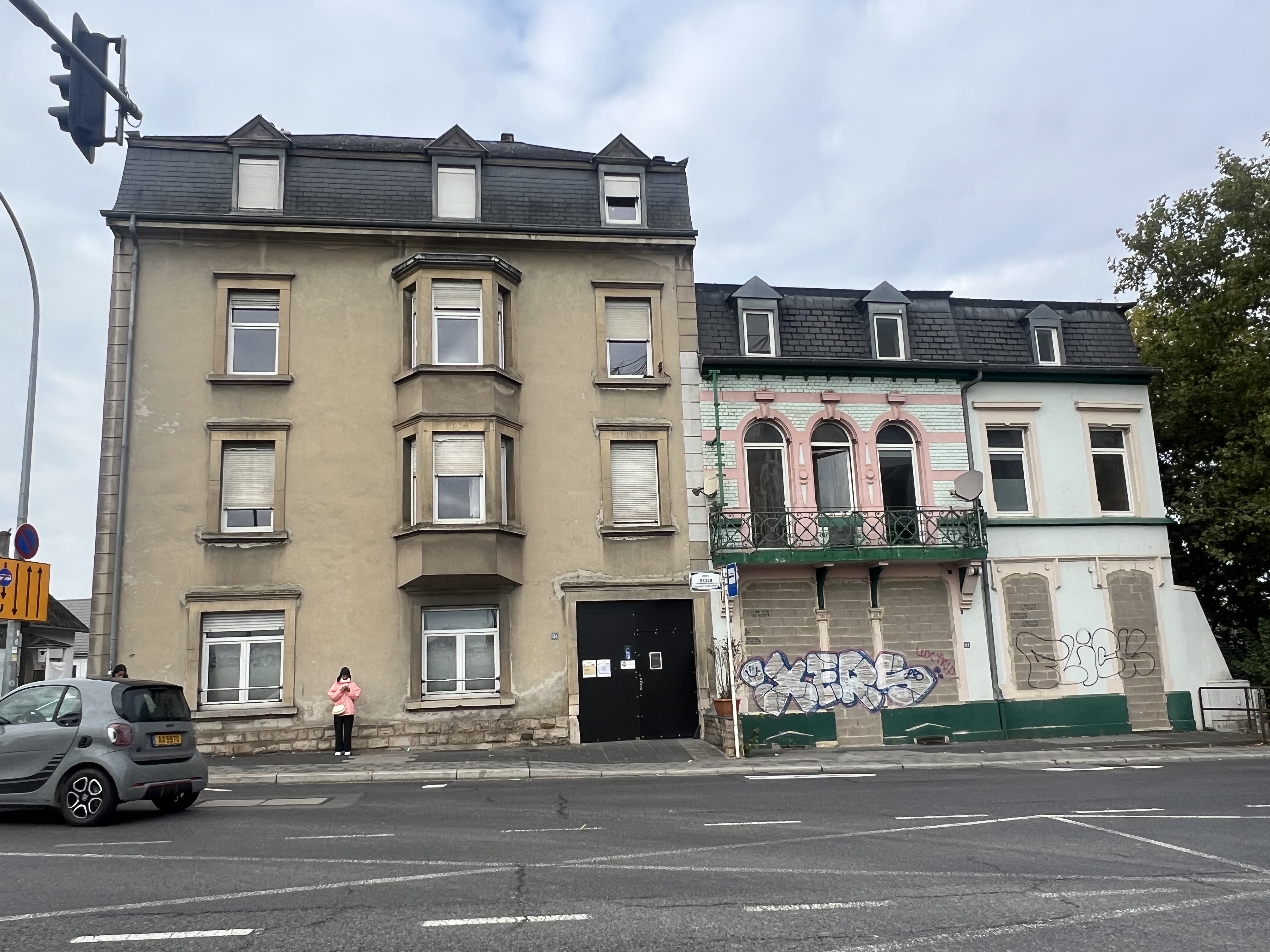
Where people move but homes don’t
What Luxembourg reveals about housing pressures and emerging market dynamics
This post was written by Tuna Tasan-Kok.
Last week, I had the pleasure of travelling to Luxembourg City for a meeting of the advisory board for the HypeRent research project[1] led by Constance Uytterbrouck[2]. Constance took us on an insightful journey through the city, combining rich discussion with an extended excursion that explored flexible and transitional forms of housing, looking beyond the usual short-stay apartments offered through platforms. Her recent publication on the shared housing experiences of young adults highlights emerging regulatory challenges, yet the broader picture appears far more complex, as the field visit that Constance carefully designed demonstrated. It provided an excellent opportunity to reflect on the tools, actors, and regulatory instruments that shape more flexible and transitional forms of housing. What struck me most in Luxembourg is how the combination of very high labour mobility, extensive cross-border commuting, and a constrained housing stock generates new market actors and distinctive challenges for housing provision, urban governance, and, by extension, planning tools. These dynamics are not unique to Luxembourg. Cities such as Amsterdam experience comparable pressures, and the lessons from Luxembourg resonate strongly with ongoing debates in the Netherlands.

Luxembourg offers a fascinating case study where housing is not merely a local issue but deeply intertwined with regional labour flows, taxation systems, and mobility patterns. The scale of mobility is striking. Between 2011 and 2021, Luxembourg’s population increased from about 512,000 to nearly 644,000, a growth largely driven by its thriving labour market (Statistiques.lu). Around 73 percent of employed residents work in a municipality other than where they live, and as of May 2024, the country counted roughly 485,000 employees (Statistiques.lu)[3]. Nearly half of them, about 47 percent, are cross-border commuters, mainly from France, Belgium, and Germany, while only one in four workers holds Luxembourgish nationality (ibid.). Despite the introduction of free public transport, almost 70 percent of residents still commute to work by car (Luxembourg Times)[4]. According to the OECD[5], this heavy reliance on private transport is closely linked to housing scarcity and rising prices, which push many workers to live farther from the capital and rely on car travel. These intertwined dynamics of population growth, commuting, and limited housing supply place enormous pressure on the market, especially for rental and temporary accommodation, and pose major challenges for planners seeking to manage mobility and housing together. As research on Luxembourg’s housing dynamics shows (Paccoud et al., 2022), these challenges are compounded by strategic landowner and developer practices such as land hoarding and land banking, which restrict housing supply and reinforce affordability pressures.
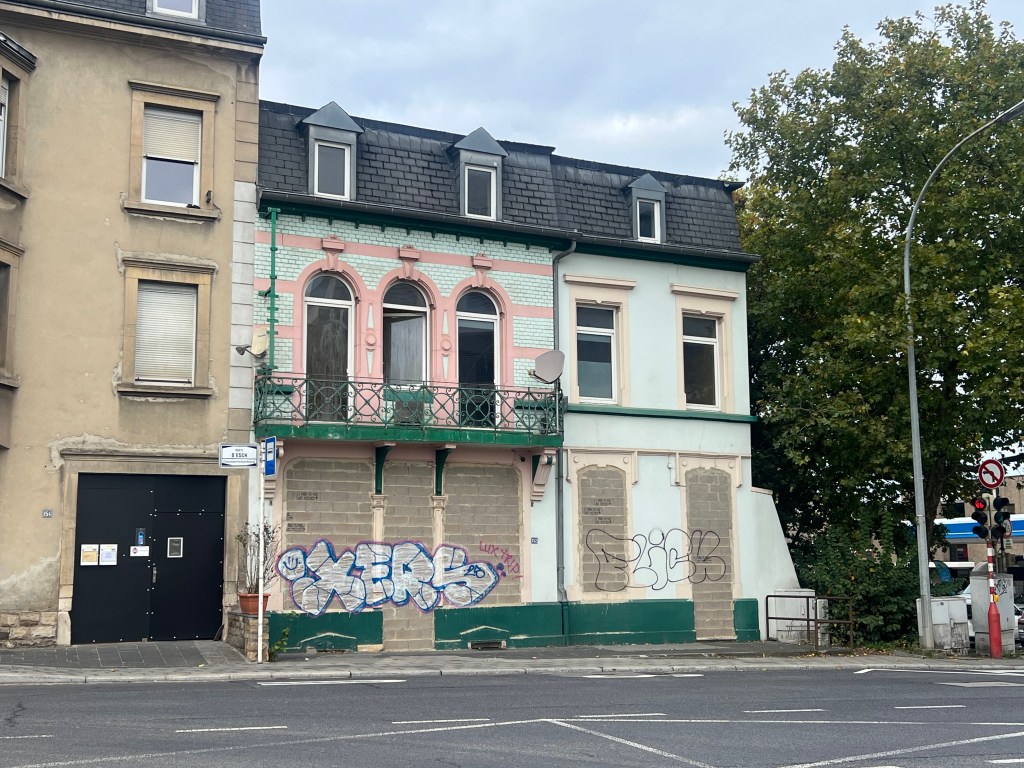
Luxembourg’s position in the Grand Region, bordering France, Belgium, and Germany, creates a highly interconnected labour and housing system. Planning tools must therefore operate across multiple scales and jurisdictions, taking account of commuting patterns, cross-border housing demand, and complex regulatory arrangements. As we argued in our recent article on governing regional affordability (Taşan-Kok, Legarza & Özogul, 2023), housing challenges are rarely confined to city boundaries and should be treated as regional governance issues that require coordinated responses across municipalities and institutions. A recent article in NRC Handelsblad (Frederiek Weeda, Huizen rond kennissteden steeds vaker gekocht door expat, 20 October 2025)[6] documents how international knowledge workers are transforming housing markets in and around Dutch knowledge cities such as Amsterdam, Utrecht, The Hague, and Eindhoven. In Utrecht’s Leidsche Rijn, for example, half of the 1,068 newly sold homes in the past three years were purchased by expats. Brokers report that international buyers often outbid locals, offering up to 13 percent above the asking price, driven by higher salaries and favourable tax schemes such as the 30 percent ruling (ibid.). Nationally, the share of international buyers on the Dutch owner-occupied market has risen from 1.3 percent in 2021 to nearly 2 percent in 2024, while in areas such as Amstelveen this figure approaches 70 percent of brokerage clients (ibid.). These patterns show how mobile, high-skilled workers are becoming long-term residents and buyers, rather than short-term tenants. This trend reshapes housing demand in ways that closely parallel Luxembourg’s experience. For cities like Amsterdam, it will be crucial to explore conditions similar to those emerging in Luxembourg, where high mobility and cross-border dynamics reshape housing markets. Without such foresight, opportunistic developers who know how to speculate on these trends and investors who strategically create new asset classes could take control of the housing stock long before planning systems are able to respond to the affordability crisis faced by local residents.
This experience reinforces that planning tools must evolve to accommodate temporality, not only through permanent housing but also through transitional, modular, and adaptable forms of dwelling. At the same time, a caring yet assertive planning hand is needed to regulate these shifts before market actors seize the opportunity unchecked. Governance can no longer remain confined to local boundaries, as commuting flows and cross-border labour mobility increasingly weave cities into wider regional networks. Addressing housing challenges today is not simply about producing more homes, but about aligning planning responses with the spatial and temporal rhythms of a mobile workforce. Exploring conditions like those in Luxembourg may help cities such as Amsterdam anticipate what lies ahead and strengthen their capacity to steer change before speculative forces take over.

Yet, the growing mobility of the workforce and the rising number of expats in cities like Amsterdam or Luxembourg that attract international talent pose challenges not only for housing and regulation but also for the meaning of urban identity itself. While cities certainly need residents who stay longer, build communities, and sustain a sense of continuity, belonging cannot be reduced to permanence alone. Following Massey’s (1994) notion of a progressive sense of place, urban identity emerges through the interplay between stability and movement, between those rooted in place and those whose attachments are formed through mobility. As Di Masso et al. (2019) remind us, place attachments today are navigated “between fixities and flows.” A shared sense of belonging can thus take shape through both enduring and transient relations, the challenge for cities is to nurture forms of community that remain open to mobility rather than threatened by it.
References
Di Masso, A., Williams, D. R., Raymond, C. M., Buchecker, M., Degenhardt, B., Devine-Wright, P., Hertzog, A., Lewicka, M., Manzo, L., Shahrad, A., Stedman, R., Verbrugge, L., & von Wirth, T. (2019). Between fixities and flows: Navigating place attachments in an increasingly mobile world. Journal of Environmental Psychology, 61, 125–133. https://doi.org/10.1016/j.jenvp.2019.01.006
Massey, D. (1994). Space, place and gender. Polity Press.
Massey, D. (2005). For space. Sage.
Paccoud, A., Hesse, M., Becker, T., & Górczyńska, M. (2021). Land and the housing affordability crisis: landowner and developer strategies in Luxembourg’s facilitative planning context. Housing Studies, 37(10), 1782–1799. https://doi.org/10.1080/02673037.2021.1950647
Taşan-Kok, T., Legarza, A., & Özogul, S. (2022). Governing regional affordability: rethinking the production of affordable spaces across the Metropolitan Region Amsterdam (MRA). Regional Studies, 57(9), 1866–1881.
Uyttebrouck, C. (2025). Enabling the emergence of shared housing for young adults in post-industrial cities: Between common interests and regulatory challenges. European Urban and Regional Studies, 0(0). https://doi.org/10.1177/09697764251361738
[1] https://liser.elsevierpure.com/en/projects/hyper-commodified-rental-housing-emergence-of-short-term-shared-a/
[2] https://liser.elsevierpure.com/en/projects/hyper-commodified-rental-housing-emergence-of-short-term-shared-a/
[3] https://statistiques.public.lu/en/recensement/aires-de-trajets-domicile-travail-internes-au-luxembourg.html?utm_source
[4] https://www.luxtimes.lu/luxembourg/almost-70-of-luxembourgers-travel-to-work-by-car/46030517.html?utm_source=
[5] https://oecdecoscope.blog/2022/11/17/luxembourg-playing-the-long-game-to-secure-the-future-of-younger-generations/?utm_source
[6] https://www.nrc.nl/nieuws/2025/10/20/huizen-rond-kennissteden-steeds-vaker-gekocht-door-expat-a4909556

You may also like


Regulatory tools for affordable housing