
UGoveRN Roundtable Series 1: Can Amsterdam Govern Its Way Out of a Housing Crisis?
Reflections from the First UGoveRN Roundtable
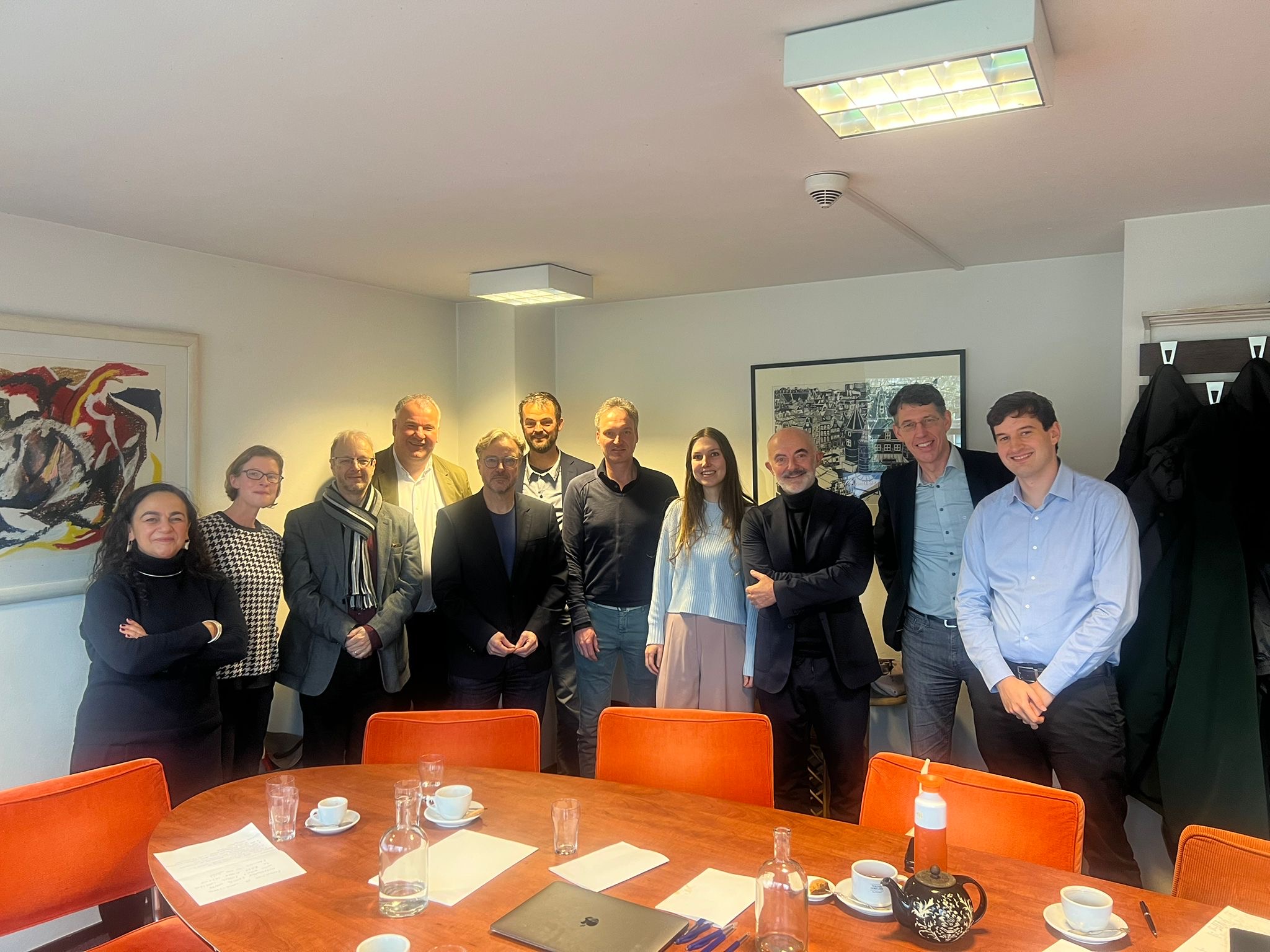
On a grey Amsterdam morning, a group of researchers, planners, municipal officials, and policy advisors gathered around a table with coffee, a shared sense of urgency, and, it turned out, rather different ideas about what the problem actually is.
That productive friction was exactly the point. The first episode of the UGoveRN Roundtable Series took housing as its opening theme – a choice that needs little justification in a city where waiting lists for social housing stretch decades, where young professionals commute in from Almere, Rotterdam, or even further, because they cannot find anything they can afford, and where the debate about short-term rentals, land speculation, and housing corporations seems to have no end. What the roundtable set out to do was not to solve the crisis in a morning session, but to think harder about why existing solutions keep falling short, and what a more structurally honest approach might look like.
Why is there a problem? (And is everyone talking about the same one?)
The session opened with Professor Ezio Micelli, member of the Housing Advisory Board of the European Commission, framing the broader context, before Jannes van Loon, researcher at WoningBouwersNL, walked participants through the Dutch situation. His argument was relatively clear-eyed: demand is outstripping supply, household formation is accelerating, and there is a persistent mismatch between what people want and what the existing stock offers. The market, in his reading, needs to be enabled to produce more: More family-sized homes. More owner-occupied options. More zoned land.
But that diagnosis did not go uncontested. Professor Tuna Tasan-Kok pushed back on supply-side framings that treat affordability primarily as a construction problem. The issue, she argued, is also, and perhaps more fundamentally, one of financialization. Investment flows, portfolio strategies, the hollowing out of long-term housing stock through short-term rentals: these are not side effects of a tight market; they are part of what creates and sustains it. The Crisis and Recovery Act (2020) had done real damage in this regard, accelerating dynamics that municipal policy was then left scrambling to contain since the global financial crises.
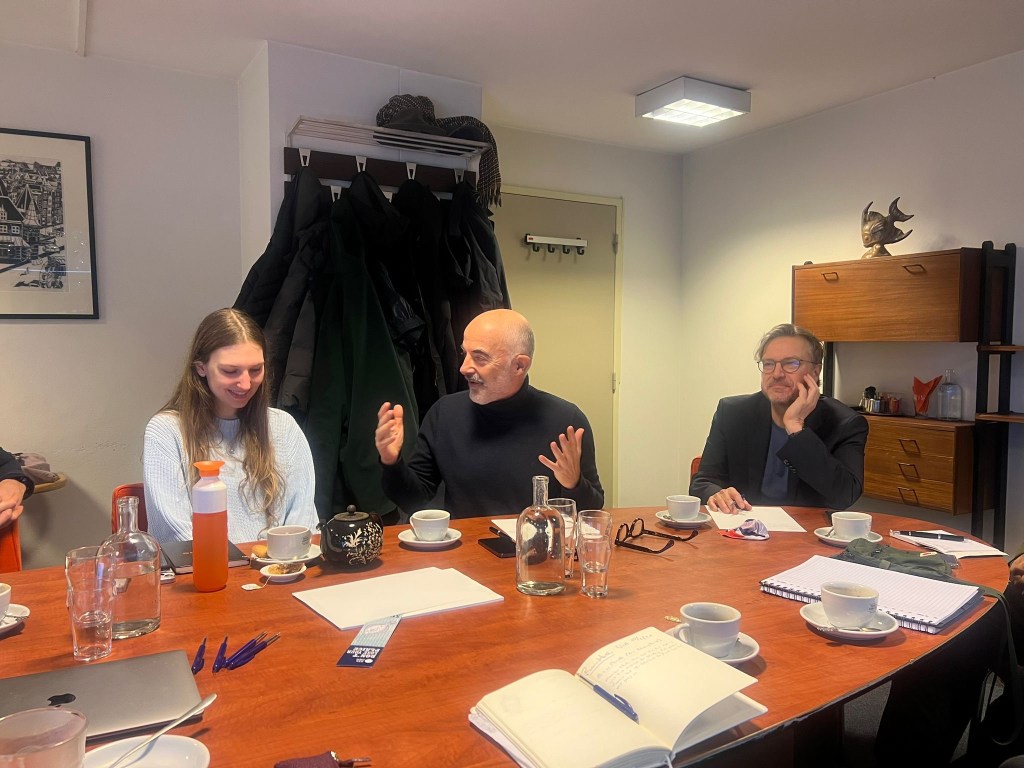
Dr. David Evers, from PBL and the University of Amsterdam, had been brought in alongside Dr. Jochem de Vries from the University of Amsterdam, to serve as discussants and observers tasked with making sense of what others were saying rather than advancing a particular line. His recap organized the discussion around four questions: why, where, who, and how. It was a useful frame, partly because it revealed just how much disagreement was tucked inside apparent consensus. “Virtually all participants agreed that housing affordability was a problem that should be addressed by government,” Dr. Evers noted. What they disagreed about was almost everything else.
Dr. Arne Bongenaar, representing the private sector as being an experienced local and international developer, argued that the government itself was part of the problem, pointing to transaction taxes and the mortgage interest deduction as demand-inflating mechanisms. Dr. Herman Kok, who is a real estate advisor, researcher, and educator, meanwhile, flagged the erosion of strategic planning capacity, a point Dr. de Vries linked directly to the rise of populist politics and the difficulty of making long-horizon decisions in an environment where elected officials are acutely sensitive to short-term sentiment. Victoria ten Hulsen, a housing policy advisor from the City of Amsterdam, highlighted the instability of national housing policy as a structural obstacle in itself. She noted that frameworks that shift with each coalition agreement make it nearly impossible for municipalities or housing corporations to plan with confidence.
Nobody was wrong, exactly. That was part of what made the morning interesting.
Where Does the Problem Actually Live?
One of Tasan-Kok’s core arguments, drawing on her work on fragmented governance and metropolitan regions, was that affordability cannot be governed at the level of a single (central) municipality. As argued in her work on regional urban systems (Ref regional affordability paper), housing must be understood as part of a broader spatial and functional landscape in which housing, employment, and transport are deeply interdependent across a metropolitan region. Housing markets do not respect administrative boundaries, and investment flows certainly do not. Labour mobility, accessibility, and the everyday geographies that connect where people work to where they can afford to live operate at a regional scale, while policy responses often remain confined to municipal jurisdictions, producing structural mismatches between governance scale and socio economic reality.This mismatch, she argued, is not a technical inconvenience. It is a structural weakness that undermines even well-designed local interventions. Amsterdam introduces a measure; pressure shifts to Zaandam, to Diemen, to Amstelveen. Without coordination across the Amsterdam Metropolitan Area (the MRA) local policy risks displacing problems spatially rather than resolving them structurally.
The awkward reality, as Dr. Evers summarised it, is that the MRA is precisely the level at which coordination is most needed and currently has the least power. Housing associations operating regionally, municipalities with competing interests, a national government oscillating between intervention and laissez-faire: the governance architecture is not designed for the problem it is supposed to address.
Jannes van Loon put a different kind of spatial argument on the table. From a European perspective, he noted, there is a larger dynamic at play. Certain regions, the so-called “European Banana” stretching from London through the Randstad, the Rhine-Ruhr, and down toward Milan, are absorbing a growing share of the European population, drawn by jobs and education. Amsterdam sits squarely in this zone. And with policies like ‘no net land take’ tightening the spatial constraints on urban development, the inelasticity of housing supply is only going to worsen. His provocation: would it not make more sense to designate at a European level where cities should be allowed to grow more rapidly, tax that growth, and use the proceeds to rewild and reforest the shrinking areas outside the Banana? It is a big idea – possibly too big for a morning roundtable – but it raised a legitimate question about whether the scale at which we debate housing governance is fundamentally too small.
Who Can Actually Do Something?
Much of the roundtable’s attention naturally fell on what the municipality of Amsterdam could and could not do. Sander Voogt’s (who is a program manager of self-building in the City of Amsterdam) contribution highlighted land leasehold as a genuine asset – one of the few instruments that gives the city real leverage over what gets built and for whom, and over what timescale. The 40-40-20 tenure model was discussed, the attempt to mandate a mix of social, mid-range, and market housing in new developments. Participants acknowledged these tools as necessary without treating them as sufficient.
Dr. Bongenaar held his ground on the private sector’s role, arguing that the housing crisis would not be solved without private capital and that the national government’s job was to create the conditions, through spatial planning, regulatory stability, and reduced transaction friction, for that capital to do productive work. Dr. Kok pushed back by arguing that institutional investors were not the enemy: they tend to think long-term, value stability, and can actually be allies in strategic planning if engaged properly. Social housing, he pointed out, is in many ways an attractive investment: predictable, low-volatility, secure.
Prof. Tasan-Kok’s contribution on this point was to reframe the question away from who the actors are and toward what we know about them. Understanding the investor landscape, who is investing in Amsterdam, with what type of capital, at what scale, over what holding periods, is a prerequisite for any meaningful regulatory engagement. Rather than relying primarily on rigid quotas, she proposed a shift toward what she called relational regulation: shared norms, negotiated expectations, collaboration platforms that align housing provision with broader regional objectives. Platforms that could also function as onboarding mechanisms, clarifying what is expected around development practices, contributions to housing supply, and commitment to the longer term.
It is a less satisfying answer than a clean policy lever. But it may be a more honest one.
Victoria ten Hulsen added a European dimension that resonated across the table. Many of the issues discussed – financial freedom for housing corporations, the regulation of short-term rentals, the conditions under which investment capital enters housing markets – are not uniquely Dutch problems. They are European ones. ”With a clearer guideline and precedent set by the EU,” she observed, “nations can make more effective steps towards a solution of the housing crisis.” The appointment of a new European Commissioner for Housing and Energy, charged with producing an affordable housing plan, was noted as a potentially significant development – one that several participants hoped would create upward pressure on national governments rather than simply adding another layer of aspiration.
How? (The hardest question)
The most honest answer from the morning was that there is no consensus here, and pretending otherwise would be a disservice to the conversation. Degrowth was the one position the room seemed united against. Whatever the environmental arguments, all participants believed that increasing housing supply was a necessary condition for improving affordability. Beyond that, the disagreements were real and probably productive.
The discussion revealed a series of underlying tensions: More land zoned for single-family homes versus intensified urban development; eregulation to stimulate building versus stronger public intervention in land markets; self-build initiatives versus institutional scale. The regulation of short term rentals formed another point of divergence. – Arne Bongenaar saw it as a distortion, Ezio Micelli pointed to the concrete human cost of tourist accommodation eating into city-centre residential stock, eroding not just housing availability but cultural heritage and the social fabric of neighbourhoods that had functioned for their residents before they became destinations.
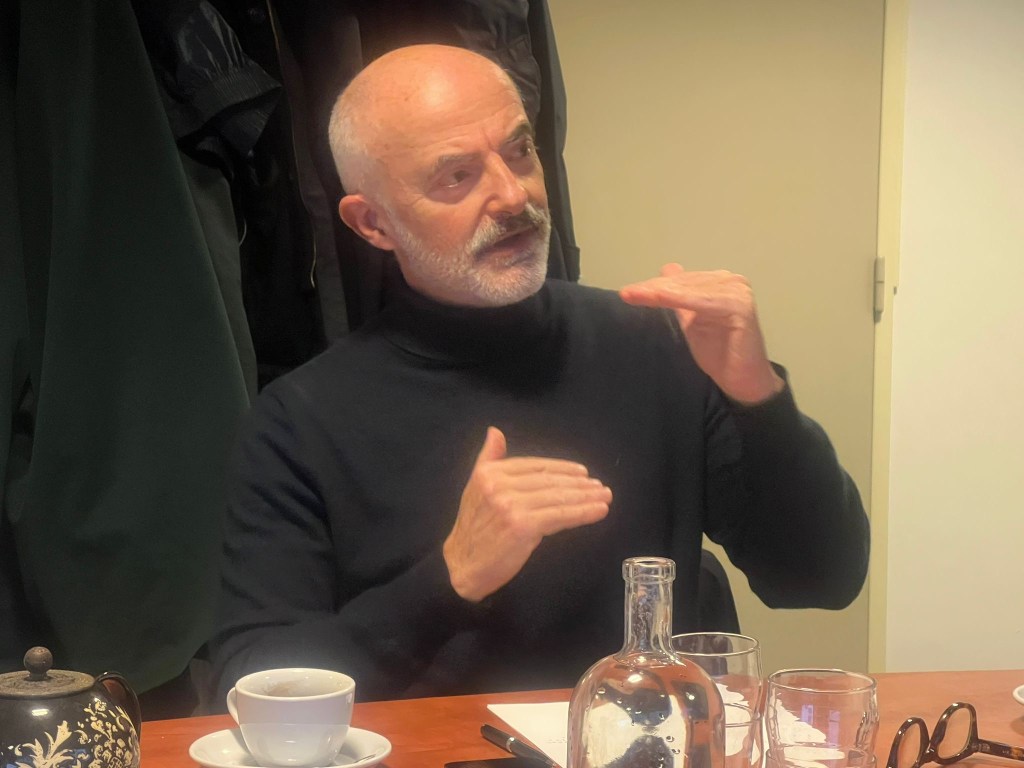
Dr. Herman Kok’s argument for more technocracy, insulating long-term planning decisions from the short-termism of electoral cycles, the kind of thing that sounds uncomfortable to say out loud but resonated with several people in the room. Strategic planning has been systematically weakened over two decades in the Netherlands, and the housing crisis is partly a consequence of that.
Dr. Evers closed the formal reflection section by naming the concrete leverage points that had emerged: land speculation, short-term rentals, housing production levels, and redistribution mechanisms. None of these is new. But the roundtable’’ contribution was to insist that they need to be addressed together, at multiple scales simultaneously, by actors who currently have neither the mandate nor the institutional architecture to coordinate effectively.
What comes next?
Victoria ten Hulsen put it plainly in her written reflection: “I hope we see some of the issues mentioned return in discussions on a larger European platform and see the input being relayed to the housing commissioner Jorgensen”The roundtable was one morning, one table, one city. But the dynamics it examined (financialized housing markets, governance fragmentation, supply inelasticity, the tension between tourism economies and residential life) are playing out across every major European urban region.
The UGoveRN roundtable series will continue with that ambition in mind: not to produce consensus where there isn’t any, but to sharpen the questions, be honest about the trade-offs, and connect the policy conversation to the governance realities that will ultimately determine whether any of the proposed solutions can actually be implemented.
The lunch at Pension Homeland afterwards was excellent and as plates circulated and conversations overlapped, food mingled naturally with deeper engagements about governance, responsibility, and the future of housing. The housing crisis, of course, remained unresolved. Yet the exchange itself was precisely the kind that needs to happen more often, and in many more rooms than this one.
The first UGoveRN Roundtable was moderated by Jochem de Vries with David Evers as a discussant, and convened by Andre Legarza. Participants included Tuna Tasan-Kok, Jannes van Loon, David Evers, Victoria ten Hulsen, Ezio Micelli, Herman Kok, Arne Bongenaar, Caroline van Campen, and Sander Voogt. The UGoveRN project examines urban governance in the context of European metropolitan transformation.

You may also like

Did Urban Planners Get It Wrong?

