

Kampung Susun: Participatory housing design in Jakarta
By Vera Setijawati and Danielle Chevalier.
Kampung Susun: The Vertical Organization of Community
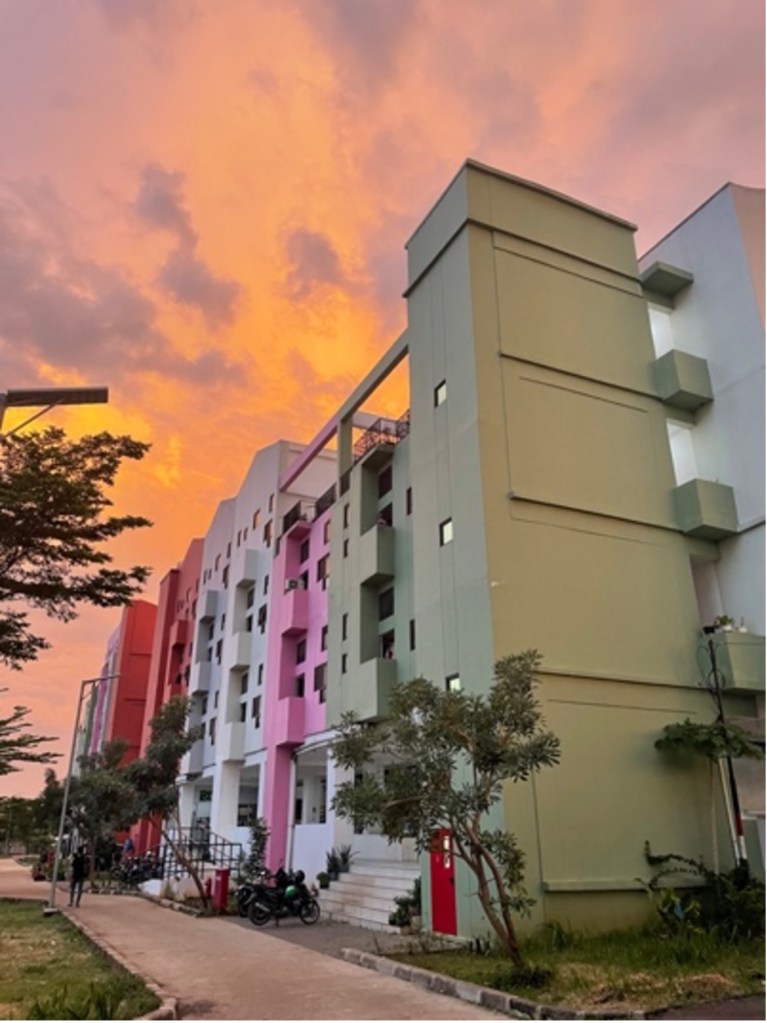
Can community structures be recreated through spatial planning? The concept of the Kampung Susun represents an ambitious attempt to do so. Kampung is the Malay word for village or area inhabited by a specific group, and effectively refers to a spatial manifestation of community. Susun translates literally into ‘stacked in layers’, and Kampung Susun consequentially refers to a vertically structured community. The idea of a Kampung Susun has been put to practice in Cakung, East Jakarta, through the construction of ‘Kampung Susun Produktif Tumbuh Cakung’. At first glance, the structure looks like a conventional residential apartment building. However, its purpose extends well beyond mere housing. Designed through participatory housing design and brought into existence through persevering community mobilization, the building seeks to serve as both a living space and place of community.
Relocating Flood-Affected Communities
Jakarta, the capital of Indonesia, is the largest city in South East Asia and one of the fastest growing economies in the world. The city is also sinking, and it is sinking fast. The rapid subsidence is caused by excessive groundwater extraction and the weight of rapid urban development, both in turn caused by the rapid growth of the urban population. As the city descends, it is increasingly rampaged by floods, and this poses significant challenges for urban planning. While planning is engaged with building housing to relocate flood victims, the question remains on how to preserve the social fabric of displaced communities.
Flood management in Jakarta then is not just a matter of controlling water but also of addressing the socio-economic vulnerabilities of affected populations. Amongst the people hardest hit are residents along the banks of the Ciwilang River, the city’s primary waterway. In 2016, residents of the Bukit Duri district were forcibly evicted, on the argument that their dwellings on the riverbanks contributed to the flooding. The legal and political complexities surrounding these evictions are substantial. In a landmark ruling, the court declared these evictions illegal, recognizing that the affected individuals had not only lost housing and land but also livelihoods, social networks and public infrastructure (205/G/2016/PTUN.JKT). The ruling underscored a reality well-documented in urban studies: displacement results in more than loss of shelter, it disrupts deeply embedded social and economic support systems. Backed by the judicial rulings that the evictions in Bukit Duri were illegal, the community successfully advocated for the construction of Kampung Susun Produktif Tumbuh Cakung as an alternative housing solution.
Participatory housing design
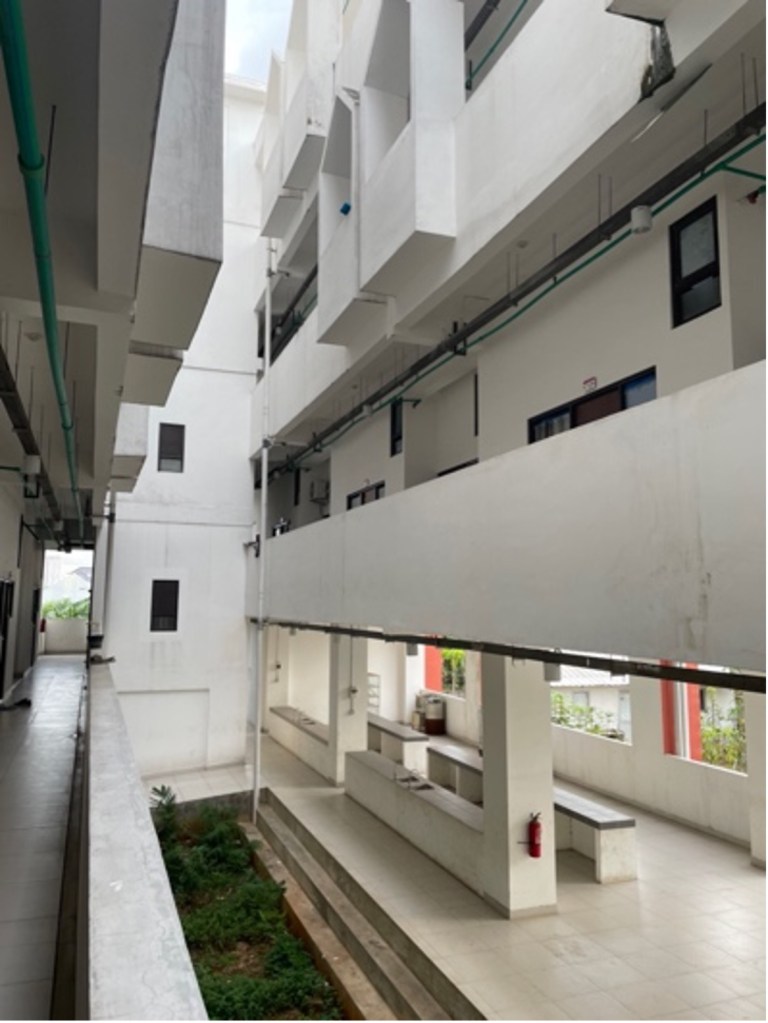
Kampung Susun is notable not only for actually coming about, but also for the participatory approach that shaped its design. Although ostensibly resembling a conventional residential apartment building, the structure diverges from traditional social housing norms in several ways. The design incorporates essential elements characteristic of the kampung, such as compact living quarters and communal spaces that foster social interaction. The residential units are stacked, but connected through wide corridors and an inner courtyard, allowing for natural light, ventilation and greenery, enhancing the communal atmosphere. A large community space situated on the top floor, complete with an outdoor terrace, and a dedicated prayer space, further supports collective engagement.
Perhaps most importantly, a distinctive aspect of the design is its accommodation of economic activities. Many kampung residents engage in small-scale enterprises or informal work from their homes. The design reflects this reality by incorporating designated business spaces within the residential units. Each unit measures 36 square meters, divided into a 21-square-meter living area with a mezzanine and a 15-square-meter adjacent space with a separate entrance, designated for commercial use. These spaces serve a variety of functions, and are used as office space, as workshop space, and also as space to run a small grocery shop. Additionally, on the ground floor of the building, a large area has been set up as a market place for food vendors, repair services, and other enterprises, reinforcing the integration of economic activities within the residential environment. The participatory design process was instrumental in ensuring that the built structure aligns with the lived realities and economic realities of its residents.
The Planned and the Lived Environment
Kampung Susun has been widely praised for its participatory housing design and is often cited as a prime example of community-centred relocation. However, as urban sociologist Herbert Gans (1994) famously observed, the planned environment and the lived environment do not always align. While spatial design is instrumental in shaping urban social dynamics, the mere construction of the built environment does not automatically lead to the desired communal and economic outcomes. The Kampung Susun project, though physically completed in 2022, is still in the early stages of fostering a cohesive community.
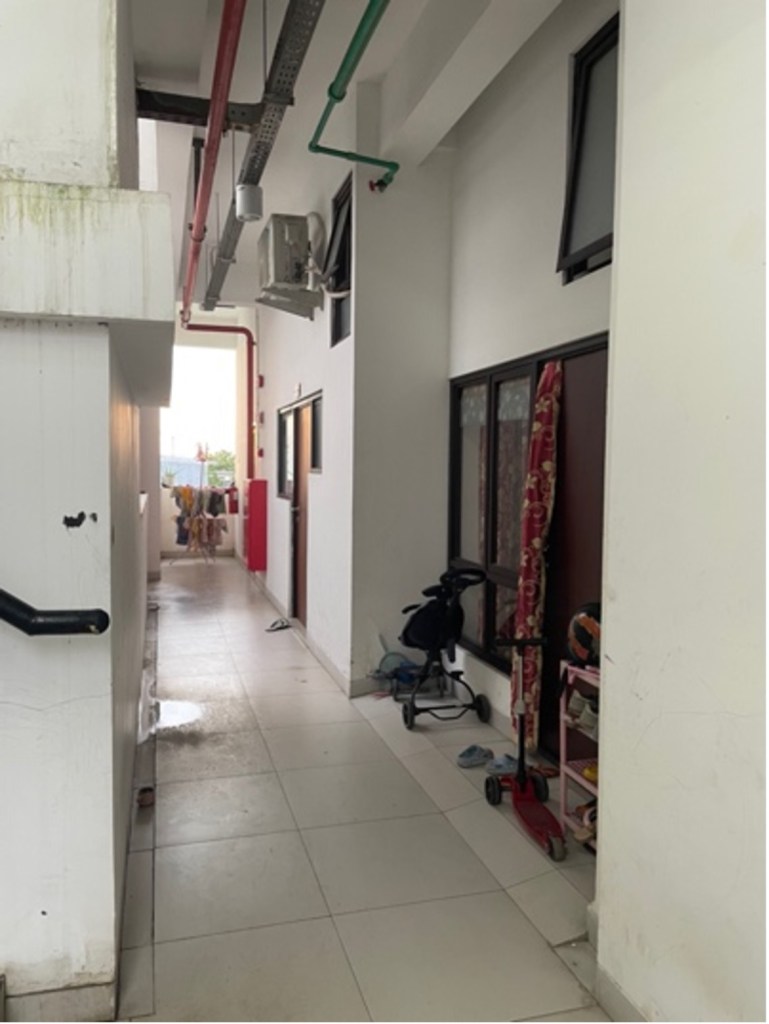
During a site visit in January 2025, signs of use and wear were already evident. Expenses have evidently been spared, and resource limitations during its construction may impact the long-term durability of the housing. Furthermore, the complex accommodates only 75 units, meaning that only a selection of the displaced community has been able to reassemble here. The six-year gap between the eviction from Bukit Duri and the relocation to Kampung Susun reflects the prolonged political and legal struggles endured by the affected residents. For many, securing housing in the new development marks the end of a long hard journey, yet in reality, the journey of rebuilding their community has only just begun.
Beyond the built construction, the success of Kampung Susun as a sustainable community depends on the social, economic and political support systems that emerge over time. The ability of residents to establish networks of mutual aid, preserve communal dynamics and sustain economic activities will ultimately determine whether kampung life can be revived in this new vertical setting. Additionally, questions remain about the scalability of this model -can similar participatory approaches be applied to other relocation projects, or is Kampung Susun a one-off? The case study underscores both the possibilities and the limitations of participatory housing design, serving as a critical reference for other urban development initiatives that strive to balance spatial planning with social sustainability.
This blog was inspired by a field visit to Kampung Susun, by Vera Setijawati and (UGoveRN member) Danielle Chevalier. Vera Setijawati is a Jakarta based lawyer and community organizer, and was involved in the coming about of Kampung Susun Produktif Tumbuh Cakung. Vera is also an external PhD candidate at the Van Vollenhoven Institute for Law, Governance and Society (Leiden University), doing her PhD research on the urban governance of water and flood management in Jakarta.

You may also like

Where people move but homes don’t

