Local power dynamics in Parisian peripheries
Three suggestions to keep urban planning & development within the public sector
This post was written by Anna Hug.
Case study research findings: understanding contemporary systems of urban governance by analyzing three recent post-industrial transition projects in a peripheral area north-east of Paris.
Have you ever wondered about the intricate systems shaping our cities? Who sets the written or unwritten rules, and who gets to bend them? Scholars observe an increased multi-actor landscape in certain contexts, highlighting how the public sector is adopting more market-oriented strategies, private sector partnerships, and situational facilitation of urban projects; supported by ‘flexible’ regulatory frameworks (see Taşan-Kok, 2008; Raco, 2022; Fraser, 2020; Savini, 2017; here, here, or here). These developments blur the distinction between public and private as they work together to provide public services and amenities, constructing our urban landscape. The diverse set of stakeholders interacting and making decisions together based on different rules, customs, and norms – geared to facilitate negotiation – makes these processes increasingly unfathomable.
My master’s thesis seeks to unravel these contemporary systems through a cross-national comparative study. I examine ‘urban governance’ as ongoing processes of negotiation among diverse actors – influenced by and embedded within their context. By comparing cases in Greater Paris and Amsterdam, I aim to assess how the contextual framework influences governance dynamics. In France, urban planning and development builds on a systematical approach and traditionally lies within state competencies (Vilmin, 1999). Contrary to my other cases in Amsterdam Noord (Dembski, 2020), it seems like they’re set on keeping it this way!
Trying to grasp the complexity of the system in place, I have been interviewing and mapping stakeholders involved in multiple development projects in two peripheral municipalities north-east of Paris. I asked them how they perceive their role, with whom they collaborate and how, and where in the processes one might find ‘flexibility’ – such as room to negotiate or exceptions made.
Based on five months of immersive fieldwork in Paris, I identified three strategies employed by the public sector to retain control over urban development. These insights, while preliminary and to be taken with a pinch of salt, showcase the governance dynamics at play.

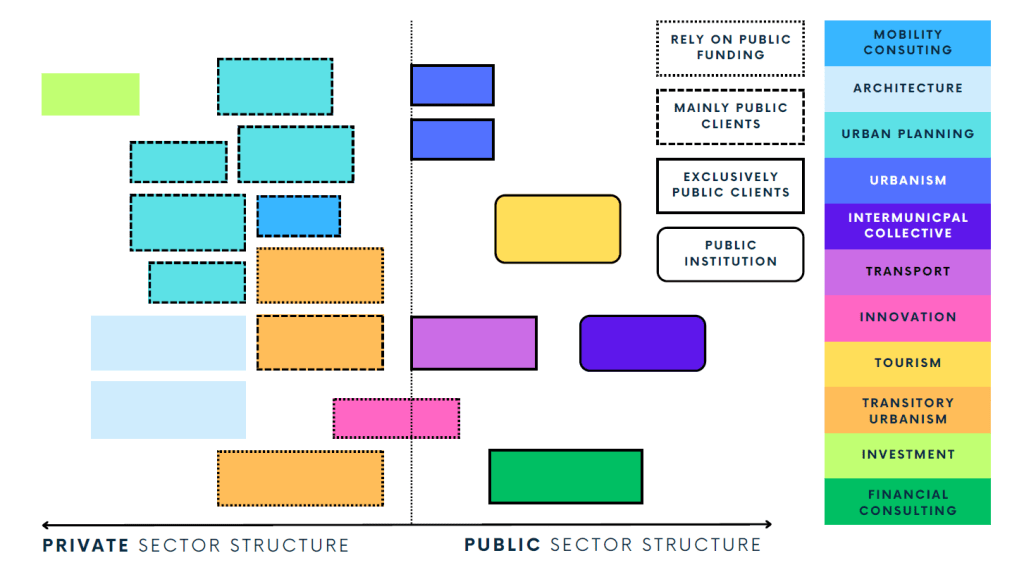
- Assemble an army of companies with a) public shareholders and/or b) public clients and/or c) reliance on public funding; this will keep as many competencies as possible under your influence.
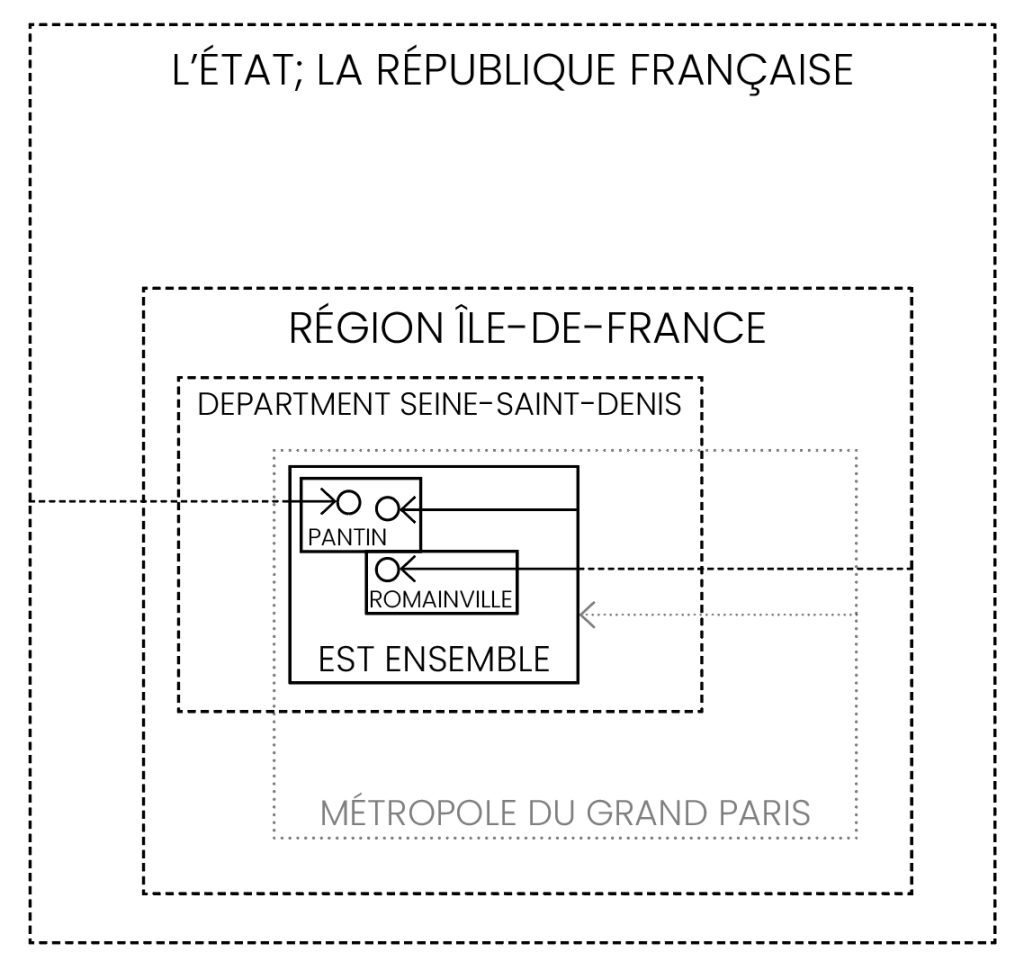
- Create a system and processes so complex, multi-layered, and rigid no one – including yourself – can clearly see through them. Consequently, it deters external actors from getting involved. After all, getting lost in the myriad of public entities and bureaucracy is as frustrating as it gets. Bonus: Build strong regulatory frameworks that support and cement your quest for control.
- Recruit important local private actors but keep boundaries sharp. A big advertising company settles down on your turf? Have them collaborate on local branding initiatives with the public tourism office. A luxury brand or renowned bank chooses you as their home? Commit them by charter and sell them shares of your public development companies. After all, de- and reconstructing the narrative of the historically poor and troubled neighbourhood benefits all of you! Quickly, real estate prices will rise, development will continue, and you will be guaranteed more glory and – most importantly – more taxes and power.
In conclusion, these strategies underscore the intricate relationship between power and control within urban governance. As I continue to explore these dynamics, the lessons from the Parisian peripheries uncover a distinct approach closely tied to its contextual setting. This nuanced understanding invites further reflection on how the public sector can effectively navigate and balance these multi-actor landscapes to foster sustainable urban development.
References
Dembski, S. (2020). ‘Organic’ approaches to planning as densification strategy? the challenge of legal contextualisation in buiksloterham, Amsterdam. Town Planning Review, 91(3), 283–303. https://doi.org/10.3828/tpr.2020.16
Fraser, G. (2020). Foucault, governmentality theory and ‘Neoliberal Community Development’. Community Development Journal, 55(3), 437–451. https://doi.org/10.1093/cdj/bsy049
Raco, M., & Brill, F. (2022). London. Agenda Publishing. https://doi.org/10.2307/j.ctv2tjdhh1
Savini, F. (2016). Self-Organization and Urban Development: Disaggregating the City-Region, Deconstructing Urbanity in Amsterdam. International Journal of Urban and Regional Research, 40(6), 1152–1169. https://doi.org/10.1111/1468-2427.12469
Tasan-Kok, T. (2008). Changing Interpretations of ‘Flexibility’ in the Planning Literature: From Opportunism to Creativity? International Planning Studies, 13(3), 183–195. https://doi.org/10.1080/13563470802521382
Vilmin, T. (1999). L’Aménagement Urbain en France: une approche systémique.

You may also like
Unpacking urban power

How justice for some ends up jeopardizing justice for all