
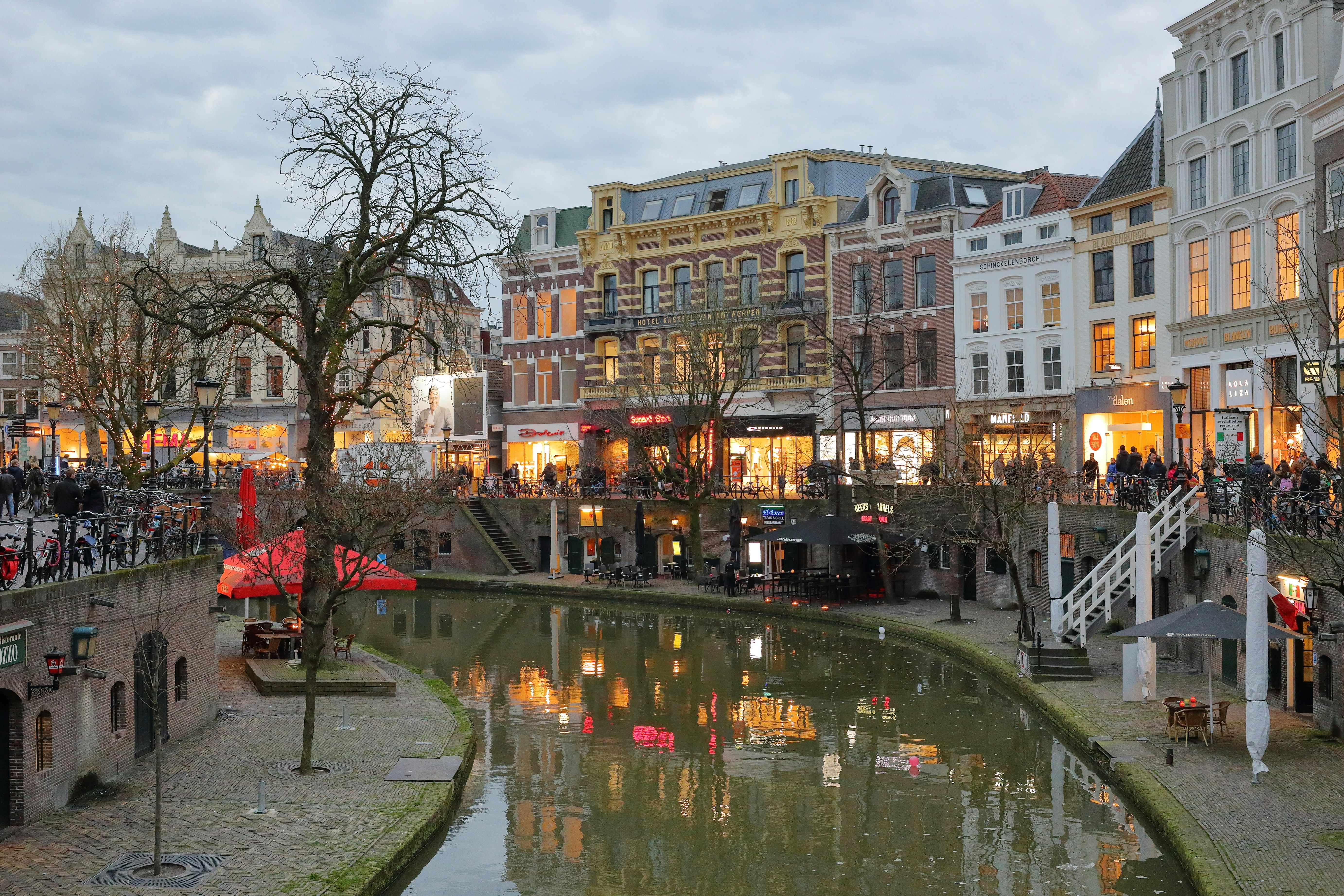
A just city through procedural justice
By perception or participation?
This post was written by Danielle Chevalier.
Does procedural justice concern the participation in processes or the perception of processes? The answer to this question depends on the lens one uses. On 5 February 2024 a meeting on “The Just City’ took place at Utrecht University. It was organized by the Community of Practice Just City and I had been invited as an expert on procedural justice. In the course of the meeting, it came to light that the socio-legal approach to procedural justice differs from how the planning domain engages with the idea; spatial governance studies link procedural justice to the possibility to participate in the process. Socio-legal studies connect procedural justice to the perception of the process. In this blog, I discuss how comparing these two different takes on procedural justice provokes several interesting thoughts on the role it plays in attaining a just city.
The just city
The idea of a just city is not new, and arguably planning always has a utopian dimension to it (Chevalier & Tzaninis, 2022); every ‘(normative) theory of planning (..) assumes an idea of the just city’ (Moroni, 2020: 258). From a spatial governance approach, justice refers to the the fair and equitable distribution of resources, opportunities, and services among all residents of a city or urban area. However, in the growing body of planning literature on the just city, Moroni (2020) (drawing on Rawls 1971) observes a blurring between the concept of justice, and conceptions of justice. In short, the concept justice defines the absence of arbitrary distinction, and conceptions of justice define the conditions under which distinctions are not arbitrary -i.e. justified. The concept then portrays an abstract ideal, on which consensus can readily be reached. The realization of the abstract ideal takes place through conceptions, and those can differ profoundly. Otherwise put, the agreement on the relevance of a just city does not entail agreement on what a just city is.
Procedural justice in spatial governance studies
Debates on how to achieve a just city in spatial governance and planning studies often involve the notion of procedural justice. The assumption is that a just process will lead to a just outcome; that process and outcome are causally related. This hypothesis has been tested by Weck & Schmitt (2023), who conclude that a just process does often but not always lead to a just outcome, and moreover that a just outcome can also come about following an unjust process. Otherwise put, a just process is not a conditio sine qua non nor an automatic guarantee to a just outcome.
Conceptualizing a just process as procedural justice, Weck and Schmitt operationalize it through a list of criteria. Drawing from a wide range of literature, they formulate four criteria on which to assess procedural justice in planning, pertaining to
(1) forms of leadership,
(2) forms of coordination and how collaboration functions,
(3) the measure to which non-key actors can participate and exert influence and
(4) the transparency and intelligibility of processes.
Moroni (2020) warns that the just outcome of a just process is often defined as distributive justice, that is to say ‘the fairness in the apportionment of resources in society’ (Burton, 2003:539). Weck and Schmitt (2023) understand a just outcome as comprising both socioeconomic politics of redistribution and cultural politics of recognition, but in their operationalization recognition appears a means towards the end of redistribution, rather than an end in itself.
In short, procedural justice in planning is understood in strong connection to the outcome of that process and puts a strong emphasis on the participation of actors in the process. A just outcome is primarily understood in terms of distributive justice.
Procedural justice in socio-legal studies
The concept procedural justice in the socio-legal domain is situated in compliance literature. It is an analytical frame developed to understand Why people obey the law (Tyler, 1990): why do people adhere to rules and comply with decisions that go against their interests? Procedural justice argues this is linked to how people perceive the process in which such rules and decisions come about. If people perceive the rule or decision to have come about in a just manner, they will yield to it, also when a rule or decision goes against their interest. The question on why procedural justice matters branches out in different directions, including the legitimacy of democratic rule of law and the trust people have in institutions.
In his most recent book legal psychologist Kees van de Bos (2023) reconfigures the notion of procedural justice into the concept of perceived procedural fairness. This he measures by asking respondents to agree or disagree on a five-point scale with the following statements: I am able to voice my opinions; My opinions are seriously listened to; I am treated in a polite manner; I am treated with respect; I am treated fairly; I am treated in a just manner; The people with whom I interact are competent; The authorities with whom I deal are professional; I am treated as an important member of my group; I feel that I am treated as a person who matters.
In short, procedural justice in the socio-legal understanding of the concept asks why people accept a certain outcome, without delving into how the outcome can be qualified. It is about how people perceive the procedure to have been, not how the procedure was set up.
Comparing the two angles
The argument I would like to put forward is that the socio-legal angle has something to offer the domain of planning in the understanding of procedural justice on two counts; (1) process is important in its own right, not just in relation to outcome; and (2) social justice and distributive justice are not synonyms. The socio-legal perspective emphasizes that people want to be heard, and treated with respect by competent and professional authorities. This matters more than whether the outcome of a procedure serves their interest. People cannot be simply reduced to rational economic beings (Van den Bos, 2011), and justice is not only about the distribution of scarce goods; Justice also pertains to rights, opportunities and power (Young, 1990; Moroni 2020).
The two closing statements Van Den Bos uses to measure perceived procedural fairness are “I am treated as an important member of my group” and “I feel that I am treated as a person who matters”. This is a connecting dot between participation versus perception. The perception of procedural justice is tied in with participating in the sense of being recognized as a person that matters. The crux is the recognition and acknowledgement as important members of a group, not the effectuation of individual interests.
In conclusion
The understanding of what procedural justice entails in the spatial governance and planning domain and in socio-legal studies partly overlaps, and partly it does not. Socio-legal scholars entering discussions on procedural justice with planners should be aware a different understanding of the concept reigns. Planners on their part stand to gain from an engagement with the socio-legal concept of procedural justice, as it shifts the focus from an economically defined outcome to the role of social dynamics, which are fundamental as well to the making of a just city.
References
Burton E (2003) Housing for an urban renaissance: Implications for social equity. Housing Studies 18(4): 537–562
Chevalier, D., & Tzaninis, Y. (2022). Planning utopia. In Utopian Thinking in Law, Politics, Architecture and Technology (pp. 208-226). Edward Elgar Publishing.
Moroni, S. (2020). The just city. Three background issues: Institutional justice and spatial justice, social justice and distributive justice, concept of justice and conceptions of justice. Planning Theory, 19(3), 251-267.
Rawls J (1971) A Theory of Justice. Cambridge, MA: Harvard University Press.
Tyler, T. R. (1990). Why people obey the law. Princeton University Press
Van den Bos, K. (2011). Vertrouwen in de overheid: Wanneer hebben burgers het, wanneer hebben ze het niet, en wanneer weten ze niet of de overheid te vertrouwen is? Ministerie van Binnenlandse Zaken.
Van den Bos, K. (2023). The Fair Process Effect: Overcoming Distrust, Polarization, and Conspiracy Thinking. Cambridge University Press.
Weck, S., & Schmitt, P. (2023). Approaching spatial justice in local development actions: A European comparative perspective on promoters, inhibitors, and achievements. In Spatial Justice and Cohesion (pp. 49-71). Routledge.
Websites:
HVA (2024) Rechtvaardige Stad. https://www.hva.nl/subsites/nl/rechtvaardige-stad/evenementen/evenementen/2024/02/community-of-practice-rechtvaardige-stad-4.html (last accessed 12.02.2024)

You may also like
Young voices, creative methods!

Kampung Susun: Participatory housing design in Jakarta
