
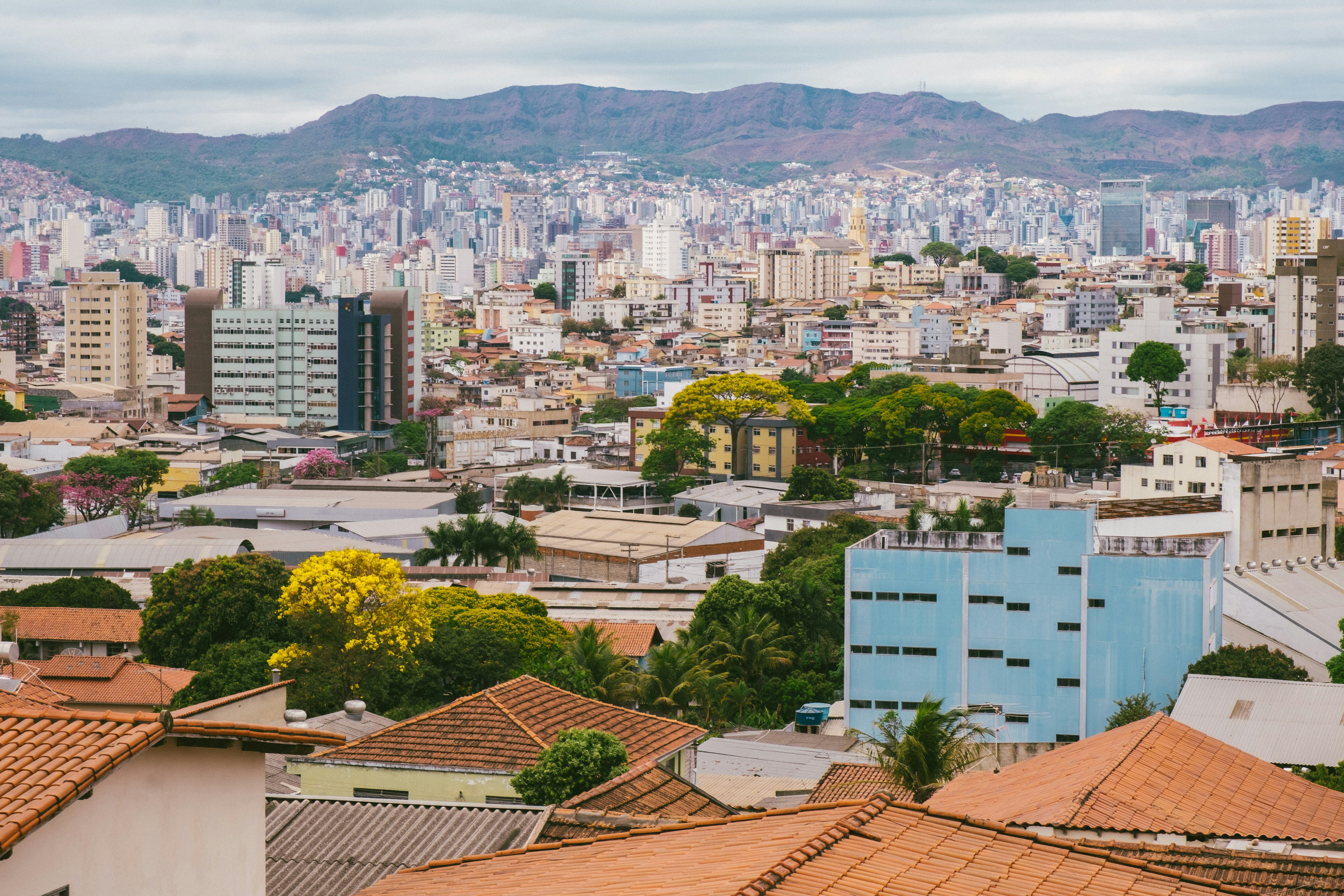
Overregulation and informal land development in Brazil
This post was written by João Tonucci.
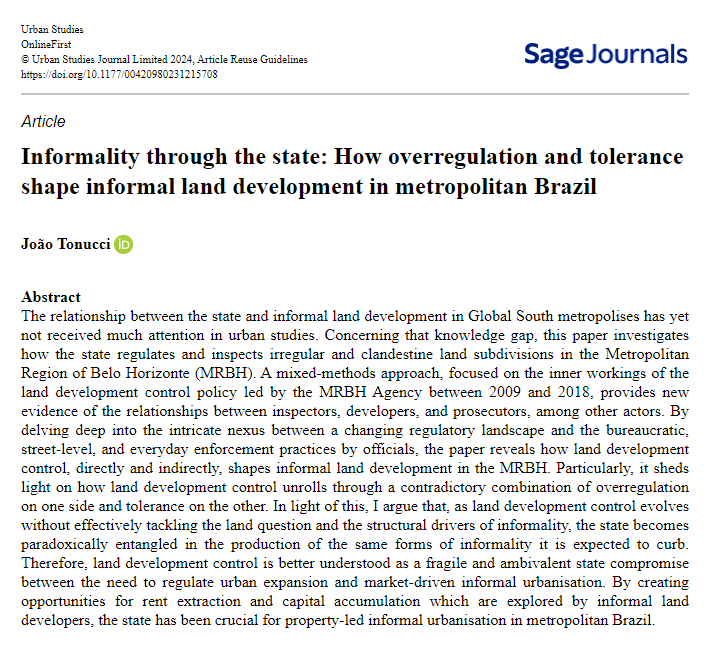
My new publication, published in Urban Studies, addresses the overlooked dynamic between the state and informal land development in Global South metropolises, focusing on the Metropolitan Region of Belo Horizonte (MRBH) in Brazil. Despite a comprehensive regulatory framework for land development control by the metropolitan authority, irregular and clandestine land subdivisions persist, expanding into peri-urban and rural areas.
Through a mixed-methods case study spanning 2009 to 2018, the research unveils the complex relationships among inspectors, developers, and prosecutors, revealing how the state influences informal land development.
The study highlights a contradictory approach of overregulation alongside tolerance for informality, resulting in a fragile compromise that inadvertently perpetuates informal urbanization, undermining effective planning efforts.
It concludes that the state’s role in facilitating informal land development sustains a property-led urbanization model, exacerbating social, racial, and environmental inequalities. The paper calls for a deeper exploration of how state operations contribute to the growing commodification of land and housing informality in Global South metropolises.
The full paper can be accessed here: https://journals.sagepub.com/doi/10.1177/00420980231215708
Tag:Publications

You may also like

Summer festivals & the unjust consequences of safety regulations

