

Revolutionizing governance through social innovation
Actions for sustainable and innovative territorial change
This post was written by Federica Scaffidi.
In the dynamic tapestry of modern society, how we govern holds the key to shaping our collective future. Enter the era of governance that promotes social innovation – a transformative approach that beckons us to reimagine how we steer the course of our communities and spaces. Let’s unravel the reasons why embracing social innovation in governance is not just a trend but a crucial imperative for sustainable urban change.
Our world is intricately woven with challenges that demand dynamic solutions. Social innovation is the compass that guides us through these complexities. Unlike traditional models, it encourages flexibility, innovation and creativity, paving the way for practical solutions to nuanced problems like urban neglect, youth emigration, and heritage demolition.
Have you ever felt distant from the decisions that shape your community and urban spaces? Social innovation flips the script, placing you in the driver’s seat. By actively involving diverse communities in decision-making, it becomes more inclusive and responsive to your needs and wishes. More importantly, it also acts and creates management models that promote the development of benefits for communities by responding to their needs and desires. This heightened engagement strengthens our social bonds, gives you a stake in the governance process, and, more importantly, creates an innovative impact on the territory.
In my research, I found that regeneration actions on neglected sites, such as industrial heritage, with social innovation are drivers of territorial innovation in cities and fringes.
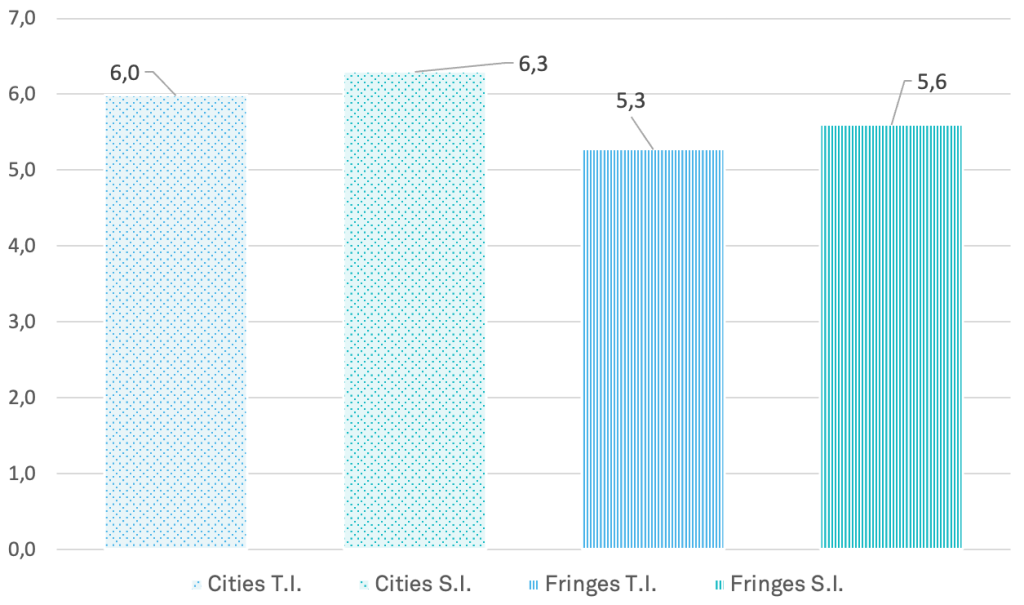
This is a new insight in this field and demonstrates the importance of developing strategies and actions of social innovation for fostering sustainable and innovative urban and territorial change. Furthermore, in my paper “Average social and territorial innovation impacts of industrial heritage regeneration“, published in Cities Journal, I demonstrate a correlation between social and territorial innovation studying 100 cases of industrial heritage regeneration with social innovation. Look at my paper to delve into the 100 examples I studied.

This result is fundamental globally because it reflects the importance of developing regeneration projects with social innovation to have territorial innovation impacts. Together, these results provide important insights into the regeneration of neglected sites and confirm the importance of social innovation in fostering territorial innovation.
Territorial innovation is crucial for revolutionising governance since it involves collaboration between various stakeholders (e.g., government bodies, enterprises, research institutions, educational organisations, and the local community). It promotes the development of innovative practices for city design and planning and more inclusive, sustainable, and vibrant urban spaces.
Sustainability is more than a buzzword; it’s a commitment to securing our planet’s future. Social and territorial innovation are natural allies in this endeavour. They go beyond addressing immediate challenges and encourage policies and initiatives that champion long-term environmental, economic, and social sustainability.
To conclude, in a world often marked by competition, social and territorial innovation thrive on collaborative, subversive and revolutionising governance. Governments, businesses, communities, and individuals unite, breaking free from traditional bureaucratic constraints. These collaborations create synergies that amplify the impact of governance initiatives, leading to more holistic and enduring solutions.

At its core, socially innovative governance is about empowering communities to thrive. It’s not just a set of regulations; it’s a facilitator of local initiatives and community-driven solutions that are socially oriented. By championing sustainable approaches, governance becomes a catalyst for building resilient and innovative communities capable of navigating change.
In a rapidly changing world, revolutionising governance is not a choice but a necessity. It’s a commitment to building a more equitable, sustainable, and interconnected future. So, as we step into this era of transformative governance, let’s embrace social innovation as the driving force that propels us towards a brighter and more innovative tomorrow. After all, the future of our urban spaces is a story we all get to co-write.

You may also like

Kampung Susun: Participatory housing design in Jakarta

Governing cities, imperfectly: Patrick Le Galès
