Who governs the (ordinary) city and how?
Learning From Urban Realities of Ordinary Cities
This post was written by Güldem Özatağan.
In their recent UGoverN blogpost, Avni and Alster (2024) grabbed a significant contemporary trend: the growing tensions between local governments and illiberal states. This tension is vividly illustrated in the case of major cities and global city regions, where the attempts of such national champions to stand against nation states accrued in the glare of publicity and found media coverage. Consider, for example Istanbul’s mayor who spoke more forcefully about his criticism of the controversial Canal Istanbul project heralded by the president and went on to open lawsuits against to cease its implementation.
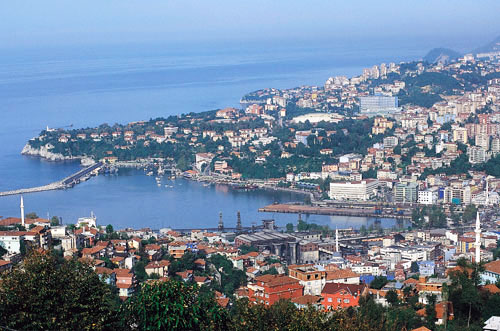
However, in practice the tension between local governments and illiberal states accrues quietly, outside public attention, especially in the case of ordinary cities. Indeed, this applies to the case of Zonguldak, Turkey, where the national state’s control over planning and property rights turned into a question of who governs the city? Given the significance of this question especially for politically rival cities that are not favoured by the centre, it is necessary to uncover the various tactics quietly pursued to influence urban governance.
Our findings from recent research, published in Regional Studies, demystified the reckless forms these tactics take. The tactics we uncovered include national state bodies disclosing key information that would inform planning decisions; backing off from partnering in critical projects and investments; and refusing to transfer property ownership. There are also bureaucratic impediments to be considered such as pretending to be supportive of projects initiated by the local government yet delaying their implementation by prolonging decisions over the required permissions. Another tactic we unveiled concerns the bypassing of local governments in planning decisions and alterations to existing plans.
Such ‘brash’ acts of control, to use Allen’s (2016) conceptualisation, offer clear evidence of the illiberal states limiting the authority of and disempowering the local state. In our paper, we also uncover the ‘subtle’ tactics pursued by the illiberal state. These often come in the form of new policy agendas that respond to local sensibilities and would hardly be contested by urban citizens.
The ‘brash’ and ‘subtle’ acts of control constitute the two facets of the reactionary strategies of illiberal states. The two facets, however, are not mutually exclusive. Rather, they are wielded simultaneously, with their intensity varying based on the political stance of the local government.
The significance of this entwined enactment, demonstrated by our research, is two-fold. First, it may lead local governments negotiate with the illiberal state to regain their lost legitimacy ahead of elections. After all, national state bodies have the fiscal, administrative, and planning capacities that local governments lack to carry envisaged projects into implementation under highly centralised governance systems.
A second, related significance is societal and concerns the hopeful prospect of favourable national state intervention prompting urban citizens to support illiberal states. In Zonguldak, this negotiation was rewarded by various state investments flowing to the locality.
One of the insights emerging from our research is that teasing out such reactionary interventions and their entwinement requires adopting a critical urban theoretical lens and learning from urban realities. This, obviously, is a daunting task that necessitates carefully designed in-depth, place-based research. However, fulfilling this task offers a means to illuminate and act on the various mechanisms that close down the space for novel and creative repertoires of local action and imaginations of possible ‘other’ futures. As our earlier findings, published in Environment and Planning A, unravelled, they impede pursuing alternative objectives that are already actually existing in cities and cultivating a common future agenda around ‘de-growth’.
While further research is needed to better understand the complexities of urban governance in ordinary cities, our research exposed how the heating polarisation between cities and illiberal states complicates what make or not make positive change possible in ordinary cities. Here, the value of researching and learning from the urban realities of ordinary cities lies in addressing their overlooked agencies in the thorny road to autonomy (Bulkeley et al., 2016) and redressing the national state centricism that dominates much of existing research on authoritarian neoliberalism (Bruff and Tansel, 2018) and neo-illiberalism (Hendrickse, 2021).

You may also like
Digital urban governance walk

Governing cities, imperfectly: Patrick Le Galès